
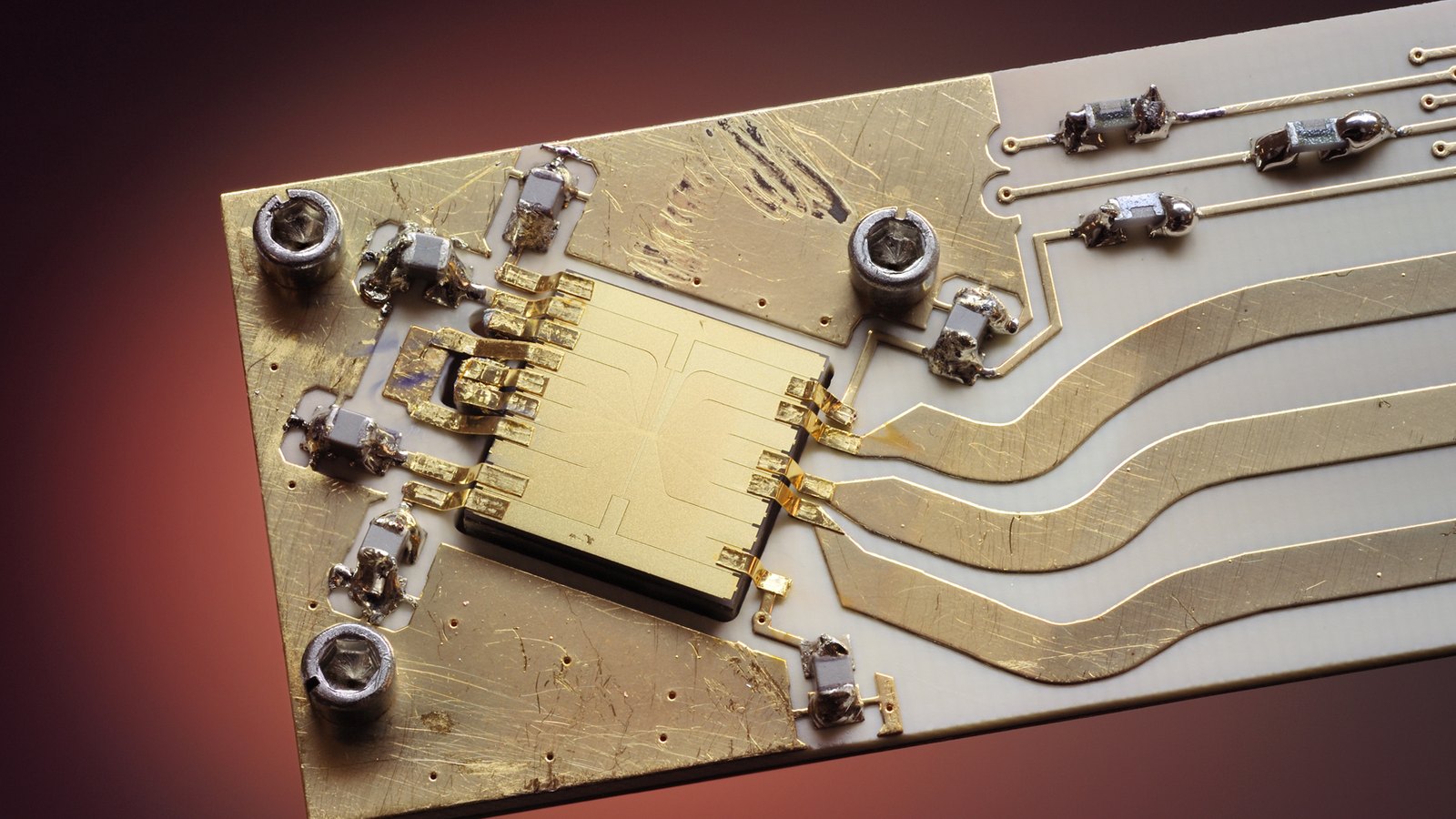
Physicists from the Technical University of Munich and the University of Innsbruck announced on August 21, 2026, that they have demonstrated an experimental protocol to certify error bounds on an analog quantum simulator operating with up to 51 qubits. Published in Physical Review X, the breakthrough establishes rigorous uncertainty quantification for quantum many-body simulations running in regimes beyond the verification reach of classical supercomputers.
Experimental Demonstration of Bounded-Error Quantum Simulation
The collaborative study, published in Physical Review X, introduces the first general framework for bounded-error quantum simulation. Theoretical development was co-led by Tristan Kraft and Barbara Kraus at the Technical University of Munich alongside Peter Zoller from the University of Innsbruck and the Institute for Quantum Optics and Quantum Information (IQOQI) of the Austrian Academy of Sciences. Experimental implementation was carried out at the University of Innsbruck by an experimental team led by Manoj K. Joshi and Christian F. Roos.
Analog quantum simulators emulate complex many-particle systems directly by mapping target physical interactions onto controllable quantum hardware, such as strings of laser-cooled trapped ions. Unlike digital gate-based processors that execute discrete logic circuits with active error correction codes, analog devices run continuous time evolution. This enables the direct study of quantum magnetic phases, high-temperature superconductivity models, and lattice gauge dynamics that quickly exceed classical computer memory. However, continuous analog evolution lacks native error correction, leaving results vulnerable to ambient noise, laser intensity fluctuations, and decoherence.
When analog processors scale beyond 50 interacting particles, classical supercomputers can no longer calculate their full wave functions to verify their accuracy. Without certified error margins, researchers could not confirm whether an observed trajectory reflected authentic physical dynamics or uncorrected systematic error. The Innsbruck-Munich protocol resolves this verification dilemma by inferring the physical generators of the quantum simulator from short-time experimental measurements and mathematically propagating uncertainties to later simulation times.
Hamiltonian and Lindbladian Learning Architecture
The protocol relies on Hamiltonian and Lindbladian learning. Rather than presuming an idealized system model, the methodology uses empirical data from initial evolution windows to reconstruct the true dynamical generators of the open quantum system. Coherent unitary interactions are modeled through an effective many-body Hamiltonian, while dissipative processes—such as spontaneous emission, dephasing, and heating—are captured by Lindblad jump operators.
The verification architecture proceeds through three procedural steps:
- Generator Learning: The simulator executes short-time dynamics initialized in product states. Randomized measurements and Pauli correlators provide data to reconstruct coupling strengths and dissipation rates.
- Statistical Error Bounding: Finite-sample measurement noise and readout uncertainties are mapped into mathematical bounds using matrix concentration inequalities.
- Dynamical Uncertainty Propagation: The learned parameter uncertainties are propagated through differential inequalities, producing rigorous confidence intervals for observables at later times where classical state tracking is impossible.
The researchers demonstrated this methodology across two experimental regimes in Innsbruck using linear strings of calcium-40 (40Ca+) ions:
| Simulation Platform | State Space Dimension | Interaction Model | Verification Method | Error Quantification |
|---|---|---|---|---|
| 10-Ion Benchmark Chain | 210 = 1,024 states | Tunable XY spin-spin couplings | Exact classical state simulation | Direct validation of theoretical error bounds against classical calculations |
| 51-Ion Scaled Simulator | 251 ≈ 2.25 × 10¹⁵ states | Long-range Ising spin interactions | Beyond exact classical state tracking | Certified confidence intervals derived directly from empirical learning data |
In the 10-ion benchmark, exact classical calculations confirmed that independent measurements fell within the certified error bounds. When applied to 51 ions, where the Hilbert space exceeds two quadrillion states, the protocol produced verifiable confidence intervals directly from laboratory measurements without classical simulation.
The Analog Verification Crisis and Classical Supercomputing Limits
The development addresses a persistent challenge in computational quantum science. In high-performance scientific computing, computational reproducibility requires algorithms to report numerical stability bounds and rounding errors. Conversely, analog quantum simulators traditionally outputted unbracketed expectation values. As physical simulators grew larger, computational scientists warned that unverified analog platforms risked producing unreplicable scientific results.
Conventional characterization methods cannot scale to large processors. Full quantum state tomography requires measurement settings that scale exponentially as 4N, demanding over 1030 configurations for 51 qubits. While randomized benchmarking provides overall fidelity averages, it cannot supply observable-specific uncertainty bounds for physical quantities like magnetization or string order parameters.
As highlighted in reporting by ScienceDaily and technical reviews from Karmactive, certified error bounds provide the mathematical foundation needed for results reproducibility in quantum simulation, enabling researchers to distinguish genuine quantum phenomena from environmental drift.
Scientific Community Response and Verification Benchmarks
Physicists emphasized that the protocol shifts the primary metric of quantum simulation from raw qubit headcounts to certified operational precision. Institutional reports from the TUM School of Natural Sciences and IQOQI Innsbruck stressed the necessity of quantitative verification.
“No real experiment is perfect,” explained lead theoretical author Tristan Kraft. “Interactions may turn out differently than expected, the system is influenced by its environment, and measurements are also subject to uncertainties. From this data, we determine the relevant interactions as well as key influences from fluctuations and noise. We then calculate how the uncertainties in this model affect the simulation results. The quantum simulator thus provides not just a single value, but a result with error margins that quantify its accuracy.”
Peter Zoller noted that certified error bounds reshape the definition of quantum advantage. “After all, when a classical computer and a quantum simulator tackle the same problem, it is not just a matter of which one delivers a result faster,” Zoller stated. “What is also crucial is which one can solve the problem with a smaller, verifiable margin of error.” This standard aligns with algorithmic benchmarking practices, where comparative performance profiles evaluate solver accuracy under bounded error tolerances.
Implications for Quantum Research Facilities and Grant Programs
Certified error quantification carries concrete procedural consequences for university laboratories, user facilities, and research offices managing quantum infrastructure:
- User Facility Protocols: Shared quantum facilities—such as European Quantum Flagship testbeds and U.S. national quantum information centers—must integrate bounded-error certification into user deliverables. External investigators need documented uncertainty intervals before utilizing simulation datasets in subsequent research.
- Data Management and Archiving: In alignment with institutional open science policies, quantum laboratories must curate comprehensive open data packages. Mandates will require sharing raw projective readout counts, reconstructed Hamiltonian and Lindbladian parameters, and error-propagation code to enable independent verification.
- Funder Evaluation Criteria: Major grant agencies, including the Austrian Science Fund (FWF), the German Federal Ministry of Research, Technology and Space (BMBF), and the European Research Council, are increasingly prioritizing reproducible uncertainty quantification over unverified qubit counts in proposal reviews.
- Commercial Research Partnerships: Corporate sponsors applying quantum simulation to materials discovery—including battery chemistry and catalyst design—require bounded predictions before allocating synthesis budgets to computationally proposed molecular candidates.
Roadmap Toward Two-Dimensional Simulators and Quantum Advantage Metrics
Building on the 51-ion demonstration, the Innsbruck and Munich research teams are extending the verification protocol to two-dimensional quantum platforms. Adapting the method to 2D trapped-ion arrays and neutral-atom optical tweezer systems represents a critical frontier. Classical tensor-network algorithms, such as matrix product states, manage one-dimensional systems efficiently but encounter steep computational walls in two dimensions due to area-law entanglement scaling.
Extending Hamiltonian and Lindbladian learning to two-dimensional geometries will allow physicists to study frustrated quantum magnetism and exotic topological phases with certified accuracy, in regimes where classical supercomputers fail completely. Concurrently, theorists are refining analytical bounds to maintain tight error limits across longer simulation durations.
The research received funding from the Austrian Science Fund (FWF), the German Federal Ministry of Research, Technology and Space (BMBF), the European Union under Horizon Europe, the Austrian Academy of Sciences, and BMW Group. As quantum simulation matures into a predictive scientific tool, certified error bars are poised to establish the standard for rigorous quantum computational discovery.
Sources
- Physical Review X: Bounded-Error Quantum Simulation via Hamiltonian and Lindbladian Learning, checked 2026-11-21
- Universität Innsbruck: Quantum simulators get error bars, checked 2026-11-21
- TUM School of Natural Sciences: Quantum simulators get error bars, checked 2026-11-21
- IQOQI Innsbruck: Quantum simulators get error bars, checked 2026-11-21
- ScienceDaily: Quantum computers are getting too powerful to check: Scientists have a solution, checked 2026-11-21
- Karmactive: Analog Quantum Simulation Verification: 51-Ion System Earns Certified Error Bounds, checked 2026-11-21


