
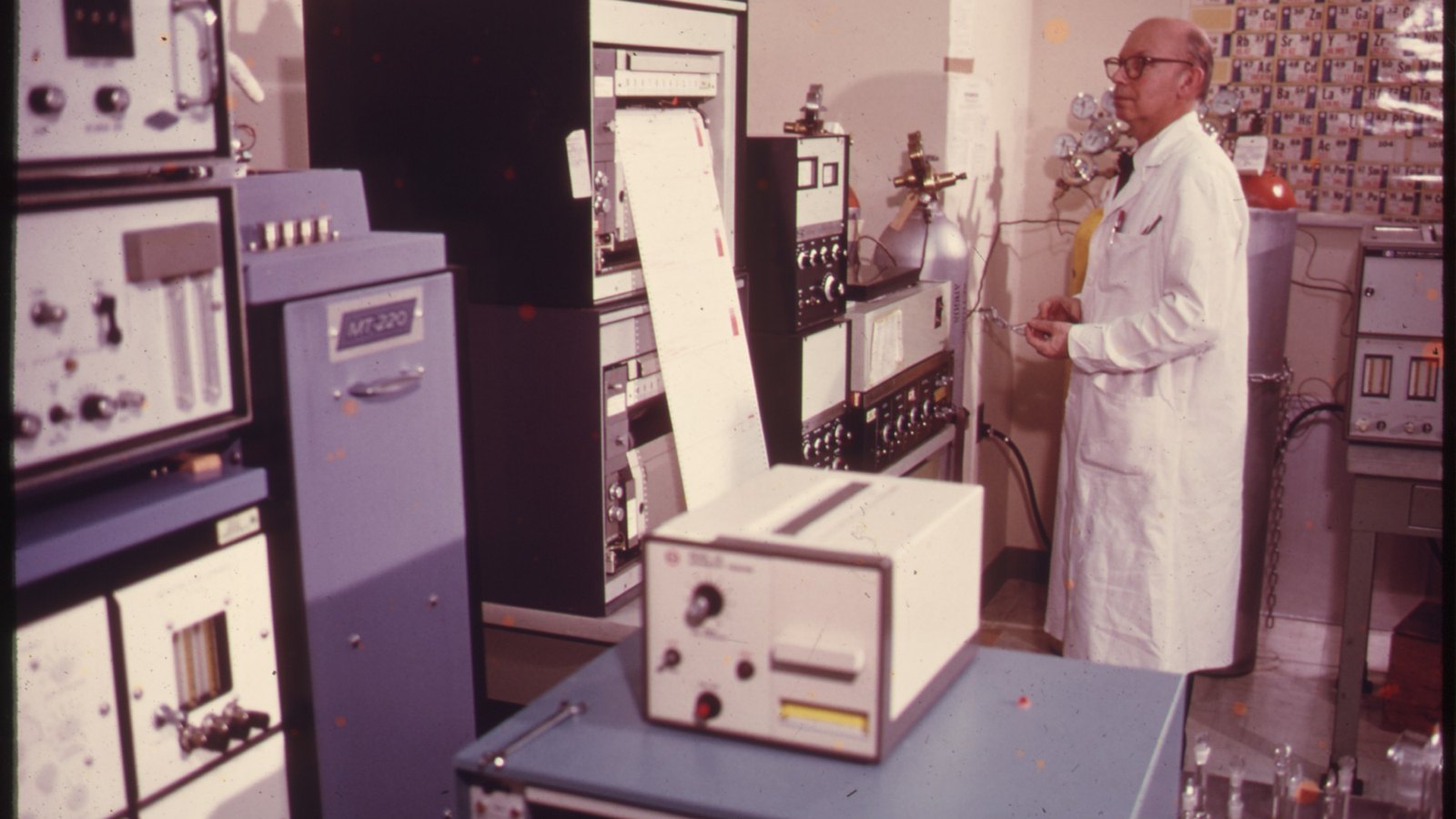
On November 20, 2026, the U.S. Environmental Protection Agency released its mandatory Toxic Substances Control Act Section 5 statements of findings for August 2026 reviews, clearing modified biological substances while spotlighting regulatory boundaries that govern university research scaling, commercial technology transfer, and laboratory research exemptions across American research institutions.
August 2026 Determinations and Section 5 Review Findings
In a formal regulatory notice filed for public inspection on November 20, 2026, the U.S. Environmental Protection Agency issued its statutory statements of findings under Section 5(g) of the Toxic Substances Control Act (TSCA). The publication, registered as Federal Register public inspection filing Document 2026-23789 and scheduled for official publication on November 23, 2026, discloses agency determinations finalized between August 1 and August 31, 2026. The findings conclude that the reviewed substances and uses are not likely to present an unreasonable risk of injury to human health or the environment.
The administrative action was formally signed on November 18, 2026, by Shari Z. Barash, Director of the New Chemicals Division within the EPA Office of Pollution Prevention and Toxics (OPPT). The notice establishes public docket EPA-HQ-OPPT-2026-1849 and directs inquiries to technical contact Rebecca Edelstein. For the August 2026 cycle, the agency highlighted review case J-26-0002, which covers a genetically engineered microorganism designated under confidential business information rules by the generic name Saccharomyces cerevisiae, chromosomal integration modification. Complete decision rationales for cleared submissions are indexed within the public EPA new chemicals determinations registry.
Notice Categories, Statutory Review Timelines, and Risk Standards
Federal oversight under Section 5 encompasses three primary notification mechanisms for novel substances and non-exempt operations. Manufacturers and importers must file at least 90 calendar days prior to initiating non-exempt commercial activities. Standard synthetic organic and inorganic molecules are processed through Premanufacture Notices (PMNs) governed by 40 CFR Part 720, whereas biotechnology innovations and intergeneric microorganisms require Microbial Commercial Activity Notices (MCANs) under 40 CFR Part 725. In parallel, existing chemicals redirected toward substantial new worker exposures or environmental release pathways require Significant New Use Notices (SNUNs).
Under the statutory mandate codified at 15 U.S. Code Section 2604, the EPA must make one of three affirmative determinations before commercial distribution can begin. When EPA finds a substance not likely to present an unreasonable risk under Section 5(a)(3)(C), the submitter may commence commercial production immediately, without waiting for the remainder of the 90-day statutory clock. Evaluating these submissions requires agency scientists to assess molecular structures, release volumes, and occupational exposure profiles, frequently utilizing computational modeling and toxicological read-across frameworks to benchmark biological hazards against structurally similar analogues.
| Submission Category | Regulatory Authority | Standard Review Timeline | August 2026 Focus | Immediate Legal Effect |
|---|---|---|---|---|
| Premanufacture Notice (PMN) | 40 CFR Part 720 | 90 Calendar Days | Synthetic chemicals and polymers | Authorizes manufacturing upon determination |
| Microbial Commercial Notice (MCAN) | 40 CFR Part 725 | 90 Calendar Days | Case J-26-0002 (yeast modification) | Immediate commercial culture and fermentation |
| Significant New Use Notice (SNUN) | 40 CFR Part 721 | 90 Calendar Days | Altered volume or exposure uses | Authorizes designated significant new use |
The Lautenberg Act Mandate and Affirmative Chemical Risk Evaluation
The legal architecture governing the August 2026 determinations reflects the comprehensive statutory overhaul enacted under the Frank R. Lautenberg Chemical Safety for the 21st Century Act of 2016. Prior to the Lautenberg amendments, TSCA operated under a passive review framework. If the agency did not affirmatively intervene or enter into a consent agreement within the statutory 90-day window, commercial manufacturing could proceed by default without an explicit federal safety finding.
The statute replaced passive clearance with an affirmative mandate under TSCA Section 5(a)(3), requiring EPA to evaluate every submission against explicit safety standards without considering economic costs. Under Section 5(a)(3)(A), if a substance presents unreasonable risk, EPA must issue restrictive rules or orders under Section 5(f). Under Section 5(a)(3)(B), if available data are insufficient or the substance exhibits substantial exposure potential, EPA issues consent orders under Section 5(e). Only when a substance satisfies Section 5(a)(3)(C) can EPA issue an unencumbered clearance, which statutorily compels the publication of the Section 5(g) statement of findings.
To maintain ongoing risk mitigation, the EPA frequently pairs Section 5 determinations with Significant New Use Rules (SNURs). While the submitter specific manufacturing profile may be found safe under designated conditions, the accompanying rule ensures that subsequent manufacturers cannot modify exposure conditions without filing a new notice. In commercial synthesis and pilot processing, facilities apply process hazard analysis protocols to verify that containment equipment, scrubbers, and occupational safeguards prevent accidental releases. Furthermore, synthetic chemists increasingly adopt the 12 principles of green chemistry during synthetic design to select non-toxic feedstocks and benign reaction pathways that minimize regulatory friction during federal reviews.
Institutional Perspectives and Laboratory Safety Compliance
Academic research institutions and scientific associations closely track Section 5 determinations because federal chemical reviews establish baseline hazard profiles that influence institutional safety programs. University environmental health and safety departments must continuously align benchtop scientific experiments with federal environmental standards. Institutional compliance guidelines, such as the University of Illinois Division of Research Safety compliance guidelines, emphasize that while academic laboratories regularly synthesize unlisted chemical entities, their day-to-day operations remain lawful only through rigorous adherence to explicit statutory exemptions.
Research safety professionals point out that biological notices, such as the August 2026 determination for modified Saccharomyces cerevisiae, reflect growing commercial interest in synthetic biology and industrial fermentation. Universities scaling genetic constructs from laboratory Petri dishes into multi-liter fermenters face distinct operational standards. Institutional oversight relies on coordinated governance, where environmental health and safety offices, institutional biosafety committees, and academic departments ensure that laboratory protocols maintain closed containment, active air filtration, and compliant waste deactivation under standard OSHA chemical hygiene plan guidelines.
Navigating the Laboratory R and D Exemption and Commercial Transfer Boundaries
The central compliance mechanism shielding academic chemistry and biology from commercial Section 5 filing requirements is the research and development exemption codified in federal regulations. Under the 40 CFR 720.36 research and development exemption, chemical substances manufactured, imported, or processed solely for scientific experimentation or research are exempt from Premanufacture Notices, provided that four mandatory operational conditions are rigorously fulfilled.
First, the activity must occur exclusively for research and development, including chemical synthesis and feasibility testing. Second, quantities must be strictly limited to volumes necessary for experimentation. Third, operations must proceed under the direct supervision of a technically qualified individual who understands the hazards. Fourth, facilities must notify personnel of known risks through documentation, labeling, and safe handling procedures. For biotechnology and engineered microorganisms, parallel provisions under 40 CFR Part 725 Subpart E define experimental boundaries and specify when contained research transitions into activities requiring a TSCA Experimental Release Application.
A critical compliance boundary occurs when academic discoveries transition into commercial development. When research teams partner with industrial sponsors, produce large-scale demonstration batches, or supply samples to prospective customers for commercial evaluation, the R and D exemption terminates. Technology transfer offices must audit developmental chemistry prior to patent licensing or industrial scale-up. In addition, university investigators shipping novel synthesized compounds to external collaborators must execute institutional material transfer agreements that explicitly restrict recipient institutions to non-commercial research use, preventing unintended federal non-compliance under TSCA Section 5.
Next Steps, Public Docket Review, and Commercialization Obligations
Following the public inspection filing on November 20, 2026, the official notice will be formally published in the Federal Register on November 23, 2026. The administrative record and public versions of submitted documentation are accessible through docket EPA-HQ-OPPT-2026-1849 on the federal regulations portal. Commercial entities holding cleared notices may proceed with manufacturing operations immediately under their submitted parameters.
Within 30 calendar days of commencing non-exempt commercial manufacture or import, the notice submitter must submit EPA Form 7710-56, known as the Notice of Commencement of Manufacture or Import (NOC). Receipt of this form initiates the formal listing of the new substance on the active TSCA Chemical Substance Inventory. For academic research centers and emerging biotechnology spin-outs, environmental compliance specialists recommend conducting comprehensive chemical inventory audits before pilot facility commissioning, ensuring that all proprietary compounds and modified strains either possess documented inventory status, an approved Section 5 determination, or verified eligibility under the 40 CFR 720.36 research exemption.
Sources
- Federal Register: Public Inspection: Certain New Chemicals or Significant New Uses: Statements of Findings – August 2026, checked 2026-11-20
- U.S. Environmental Protection Agency: Chemicals Determined Not Likely to Present an Unreasonable Risk Following Pre-Manufacture Notification Review, checked 2026-11-20
- University of Illinois Division of Research Safety: Toxic Substances Control Act (TSCA), checked 2026-11-20
- Legal Information Institute: 40 CFR 720.36 – Exemption for research and development, checked 2026-11-20
- Legal Information Institute: 15 U.S. Code 2604 – Manufacturing and processing notices, checked 2026-11-20


