
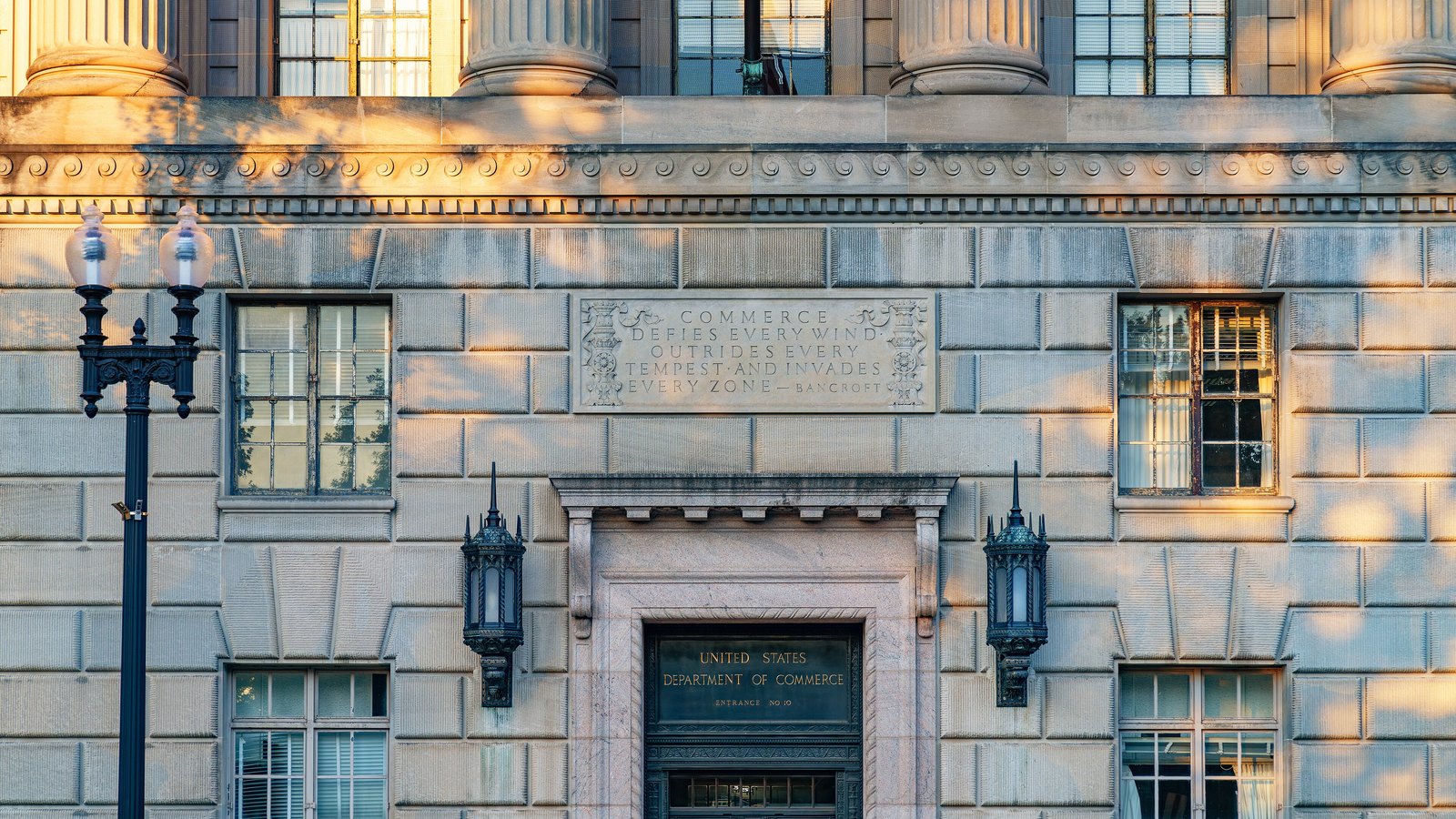
On November 25, 2026, the International Trade Administration of the U.S. Department of Commerce issued the official continuation of antidumping and countervailing duty orders on prestressed concrete steel wire strand from the People’s Republic of China following affirmative sunset review determinations. The decision cements tariff margins of up to 193.55 percent on imported structural strand, directly reinforcing domestic sourcing mandates and Buy America compliance requirements for federally funded university research facilities and civil engineering infrastructure projects.
Commerce Department and USITC Finalize Sunset Determinations
The International Trade Administration, operating within the U.S. Department of Commerce, placed Notice 2026-23992 on public inspection on November 24, 2026, with formal publication in the Federal Register scheduled for November 25, 2026. The notice confirms the continuation of existing antidumping duty and countervailing duty orders on prestressed concrete steel wire strand (PC strand) imported from the People’s Republic of China. Signed by Deputy Assistant Secretary Scot Fullerton, the action completes the third five-year sunset review conducted under Section 751(c) of the Tariff Act of 1930.
The continuation follows coordinated administrative reviews by Commerce and the U.S. International Trade Commission. Commerce determined that revoking the existing trade orders would likely lead to the continuation or recurrence of dumping and countervailable subsidies. Concurrently, the commission published its determination on November 10, 2026, under Investigation Numbers 701-TA-464 and 731-TA-1160, finding that revocation would lead to the continuation or recurrence of material injury to domestic producers within a reasonably foreseeable time. Because both agencies issued affirmative findings, Commerce ordered U.S. Customs and Border Protection to continue collecting required cash deposits at established tariff rates.
Duty Margins and Regulatory Scope of the Continuation Orders
The product scope covers PC strand produced from wire of non-stainless, non-galvanized steel suitable for pretensioned and post-tensioned applications in prestressed concrete. Covered merchandise includes covered and uncovered strand across all types, grades, and diameters, typically sold in nominal sizes from 0.25 inches to 0.70 inches. Galvanized strand is excluded only if its zinc coating meets or exceeds the 0.40 ounce per square foot standard specified in ASTM A475. Imports enter under Harmonized Tariff Schedule of the United States subheadings 7312.10.3010 and 7312.10.3012.
Under the expedited sunset results, Commerce notified the commission that dumping margins likely to prevail reach up to 193.55 percent across the China-wide entity. Net countervailable subsidy rates remain at 9.42 percent for Fasten Group Corporation, 45.85 percent for Xinhua Metal Products Company, and 27.64 percent for all other Chinese exporters. In standard structural testing, low-relaxation seven-wire steel strand is specified under ASTM A416/A416M, requiring verification of mechanical properties including tensile strength and elongation.
| Regulatory Parameter | Administrative Citation | Key Rates and Specifications | Enforcement Agency |
|---|---|---|---|
| Antidumping Duty Order | Investigation A-570-945 | Up to 193.55% dumping margin | Commerce / CBP |
| Countervailing Duty Order | Investigation C-570-946 | 9.42% to 45.85% net subsidy rate | Commerce / CBP |
| Material Standard | ASTM A416 / ASTM A475 | 0.25 to 0.70 inch low-relaxation strand | Materials Testing Laboratories |
| Domestic Preference Mandate | 2 CFR Part 184 (BABA) | 100% domestic melting and manufacture | Federal Granting Agencies |
| Effective Date of Continuation | Federal Register Doc. 2026-23992 | November 10, 2026 (applicable date) | Commerce / USITC |
History of Trade Enforcement on Prestressed Concrete Steel Strand
Trade remedies on Chinese PC strand originate from petitions filed by domestic steel manufacturers in May 2009. Commerce issued affirmative final determinations in 2010, establishing the original antidumping duty order on June 29, 2010, and the countervailing duty order on July 7, 2010. The original investigation documented substantial state subsidization through preferential wire rod pricing, government loans, and direct export incentives, paired with margins undercutting market pricing.
Under Section 751(c) of the Tariff Act, Commerce and the commission must conduct sunset reviews every five years to determine whether terminating orders would cause renewed injury. Reviews concluded in 2015 and 2021 consistently reaffirmed that Chinese state-supported production capacity far exceeded domestic consumption, creating structural incentives to export subsidized materials. The 2026 review followed expedited procedures after domestic producers submitted substantive responses demonstrating continuing vulnerability, while Chinese foreign producers declined full participation.
Agency Findings and Domestic Industry Perspectives
Commerce determined that Chinese manufacturers continue to benefit from extensive state assistance, finding that revocation would lead to renewed dumping. The domestic PC strand industry emphasized in administrative filings that foreign mills retain substantial excess stranding capacity capable of distorting North American construction markets if duties lapsed.
The International Trade Commission highlighted in Publication 5809 that domestic manufacturers have invested heavily to serve critical civil infrastructure sectors. The commission observed that elevated financing costs and material inflation have created challenging conditions for structural steel suppliers, leaving domestic producers vulnerable to import disruptions. Federal infrastructure agencies, including the Federal Highway Administration, maintain strict oversight over highway bridges and transit structures that rely on domestic prestressing strand, reinforcing market stability.
Compliance Impact on University Infrastructure and Civil Engineering Grants
For academic research institutions, the continuation of these orders intersects directly with federal award compliance and physical campus infrastructure management. University civil engineering departments regularly operate heavy structural testing facilities, earthquake engineering reaction frames, and large-scale shake tables that require high-strength prestressing tendons. Principal investigators procuring structural materials for sponsored testing or reaction frame modifications must navigate federal procurement standards. Institutional teams should consult their federal grant compliance checklist to ensure purchases meet statutory thresholds.
Federal research facilities constructed or upgraded using federal grants are subject to the Build America, Buy America Act under Title IX of Public Law 117-58. Codified under 2 CFR Part 184, the regulations require that all iron and steel products permanently incorporated into federally assisted infrastructure must be produced entirely in the United States, meaning every manufacturing process from the initial melting stage through wire drawing must occur domestically. Agencies funding university laboratories, such as the Department of Energy, National Science Foundation, and National Institute of Standards and Technology, enforce these provisions across facility modernization awards.
Research offices must maintain robust internal controls for federal grant compliance when managing structural construction contracts and laboratory renovations. If a contractor or materials vendor supplies imported PC strand without an approved federal waiver, the institution faces severe compliance risks. Uncertified foreign materials can trigger an unallowable cost determination under 2 CFR 200, resulting in grant disallowances, mandatory structural remediation, or False Claims Act exposure. Research administrators must also establish active subrecipient monitoring procedures to verify that subcontractors and fabricators provide certified Mill Test Reports confirming domestic provenance.
When drafting technical specifications for laboratory equipment, test beds, or experimental concrete specimens, project teams should apply structured procurement guidelines. Guidance on request for proposal lab procurement ensures that solicitations explicitly require domestic melting, ASTM A416 traceability, and full adherence to trade remedy orders and federal domestic preference rules.
Next Steps and Administrative Enforcement Timelines
Following publication of Notice 2026-23992, U.S. Customs and Border Protection continues to enforce cash deposit requirements on all entries of covered merchandise from China. Importers of record remain legally obligated to declare subject shipments under antidumping and countervailing duty case numbers A-570-945 and C-570-946 and remit required duties upon entry.
The notice also establishes administrative requirements for parties subject to Administrative Protective Orders, mandating timely written confirmation of the return or destruction of proprietary business data disclosed during review proceedings. Under Section 751(c)(2) of the Tariff Act and 19 CFR 351.218(c)(2), Commerce is scheduled to initiate the next five-year sunset review no later than 30 days prior to the fifth anniversary of the commission’s determination, placing the next formal review window in October 2031.
Sources
- Office of the Federal Register: Public Inspection: Antidumping or Countervailing Duty Investigations, Orders, or Reviews: Prestressed Concrete Steel Wire Strand from the People’s Republic of China, checked 2026-11-25
- Electronic Code of Federal Regulations: 2 CFR Part 184 — Buy America Preferences for Infrastructure Projects, checked 2026-11-25
- U.S. Department of Energy: Build America, Buy America, checked 2026-11-25
- ASTM International: A416/A416M Standard Specification for Low-Relaxation, Seven-Wire Steel Strand for Prestressed Concrete, checked 2026-11-25
- Federal Highway Administration: Buy America – Construction Program Guide, checked 2026-11-25






