
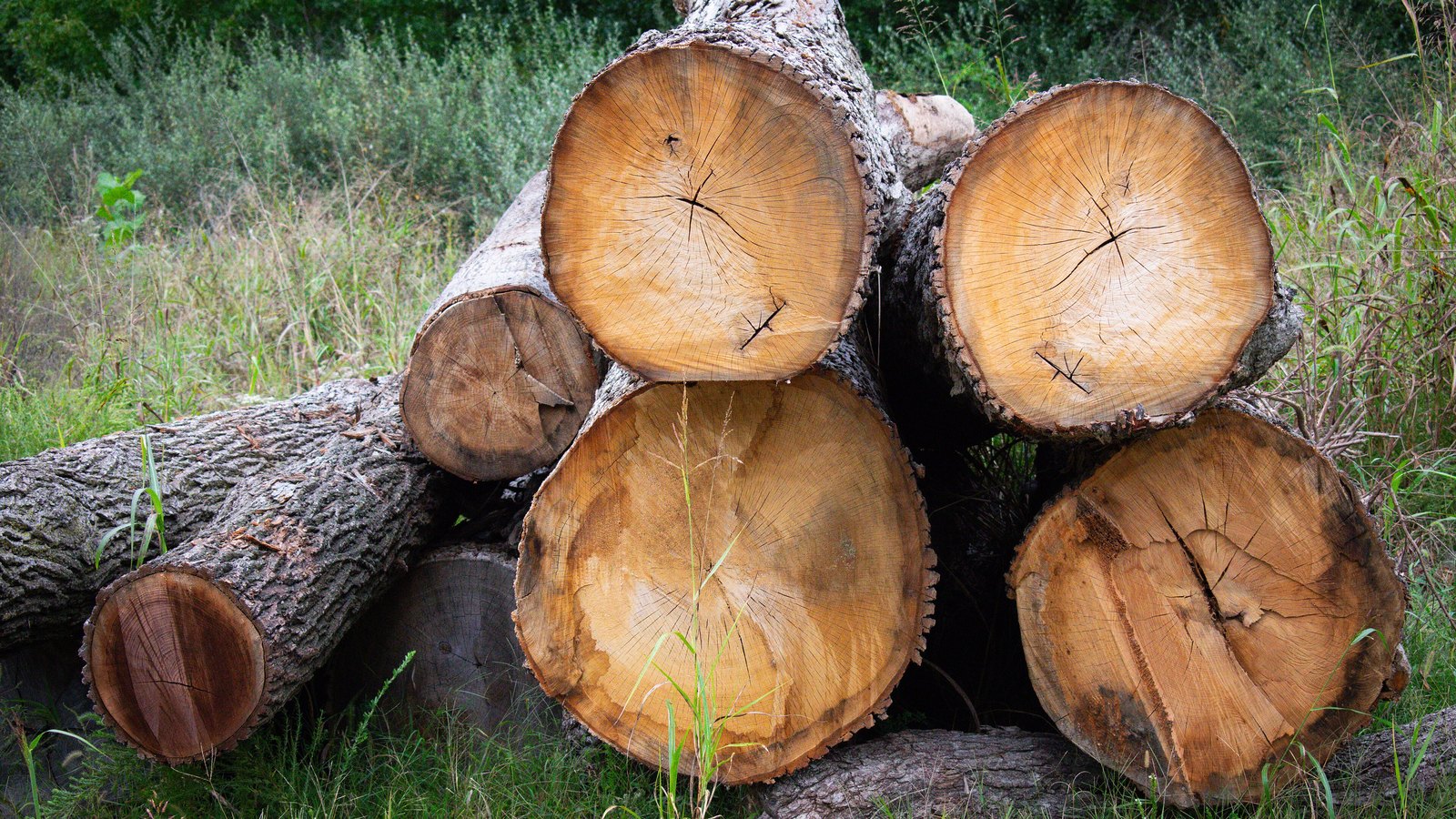
Following its earlier binational panel dispute notices under modern trade pacts, the US Department of Commerce International Trade Administration published a formal notice on 23 November 2026 announcing the procedural completion of the North American Free Trade Agreement Article 1904 binational panel review in the long-standing Canadian softwood lumber countervailing duty investigation, officially discharging the binational panel effective 19 November 2026 and establishing critical administrative precedents for academic researchers evaluating cross-border resource subsidy valuation models.
Formal Completion of the Softwood Lumber Panel Review
On 23 November 2026, the United States Section of the NAFTA Secretariat within the Department of Commerce’s International Trade Administration issued Federal Register Notice 2026-23773, confirming the completion of the binational panel review in the dispute captioned Certain Softwood Lumber Products from Canada: Final Results of the Countervailing Duty Investigation and Final Determination. The dispute, docketed under Secretariat File Number USA-CDA-2017-1904-02, represented a core Chapter 19 challenge under the North American Free Trade Agreement (NAFTA).
According to the official notice signed by US Secretary Vidya Desai of the NAFTA Secretariat in Washington, DC, the five-member binational panel was discharged from its duties effective 19 November 2026. The discharge was completed pursuant to Rules 78 and 80 of the NAFTA Rules of Procedure for Article 1904 Binational Panel Reviews, which govern the final disposition of panel reviews after remand proceedings conclude. This action marks the formal administrative close of the binational review of Commerce’s original 2017 countervailing duty investigation, establishing a settled legal benchmark for ongoing trade remedy proceedings under the successor United States-Mexico-Canada Agreement (USMCA).
Investigation Parameters and Administrative Timeline
The procedural mechanism under Rules 78 and 80 provides that when a panel issues a final decision affirming an agency remand determination and no Notice of Appeal to an Extraordinary Challenge Committee is filed within statutory windows, the responsible Secretariat section issues a Notice of Completion of Panel Review. This notice dissolves the panel, terminates its ad hoc jurisdiction, and remands the administrative record to Commerce.
| Proceeding Parameter | Administrative Specification | Regulatory and Statutory Authority | Sourced Milestone or Determination |
|---|---|---|---|
| Secretariat Docket | Secretariat File No. USA-CDA-2017-1904-02 | NAFTA Chapter 19, Article 1904 | Initial request filed November 2017 |
| Governing Rules | Rules 78 and 80 (Panel Discharge and Completion) | NAFTA Article 1904 Rules of Procedure | Panel discharged effective 19 November 2026 |
| Core Product Scope | Certain Softwood Lumber Products | Harmonized Tariff Schedule 4407.10, 4409.10 | Dimensional coniferous framing timber and boards |
| Administering Framework | Department of Commerce ITA Oversight | 19 CFR Part 356 | Implementation of binational panel dispute reviews |
| Central Valuation Issue | Provincial Crown land stumpage benchmarks | Section 771(5) Tariff Act 1930 (19 U.S.C. 1677(5)) | Less than adequate remuneration subsidy calculation |
| Federal Register Publication | FR Doc. 2026-23773 (Billing Code 3510-GT-P) | 89 FR Notice (US Section, NAFTA Secretariat) | Published 23 November 2026 |
The conclusion of this docket resolves a seven-year procedural cycle during which the binational panel issued successive remand orders directing Commerce to reassess provincial stumpage calculations, benchmark adjustments, and company subsidy rates. With the panel’s final affirmation and the expiration of extraordinary challenge windows, the findings govern the definitive countervailing duty calculations for the period of investigation.
Stumpage Valuation Models and Countervailing Duty History
The economic heart of the US-Canada softwood lumber dispute lies in divergent forest tenure systems. In Canada, approximately 90 percent of commercial timberland is public Crown land administered by provincial governments. Provincial ministries assess stumpage—the fee charged to forest companies to harvest standing timber—through administrative appraisal formulas. In contrast, commercial timberland in the United States is primarily privately owned, with harvest rights established through competitive open-market bidding.
For scholars working in academic forestry science and resource economics, the central dispute has focused on whether provincial stumpage constitutes an actionable government subsidy under US trade remedy law by providing timber at less than adequate remuneration. In its original 2017 determination, Commerce concluded that provincial timber pricing distorted fair market values and utilised cross-border or private benchmark comparisons to calculate subsidy margins.
Canadian respondents and provincial authorities contested these comparisons, arguing that Commerce violated trade standards by comparing Canadian timber stands with unadjusted cross-border US private timber sales. Econometricians highlighted that differences in species composition, stand density, terrain accessibility, log quality, and mandatory silvicultural obligations (such as reforestation required under provincial law) created substantial hedonic price disparities. Under Article 1904 review, the panel scrutinized Commerce’s econometric regression specifications and benchmark tiers, remanding provincial stumpage benchmarks for recalculated adjustments.
Bilateral Trade Remedy Jurisprudence and Institutional Responses
The conclusion of this proceeding illustrates the parallel tracks of international trade litigation. Canadian exporters and governments have litigated softwood lumber duties simultaneously before domestic US courts, binational NAFTA/USMCA panels, and the World Trade Organization (WTO).
At the multilateral level, Canada initiated proceedings at the WTO under dispute DS533: United States — Countervailing Measures on Softwood Lumber from Canada, challenging Commerce’s investigation under the WTO Agreement on Subsidies and Countervailing Measures. The WTO panel in DS533 issued a comprehensive report addressing benchmark selection under Article 14(d), echoing many econometric concerns raised in the binational panel proceedings.
From the Canadian policy perspective, Global Affairs Canada has consistently maintained that Canadian producers operate on market principles and that US duties create supply chain friction and inflate construction costs. In contrast, the US domestic industry, represented by the Coalition for Fair Lumber Imports, has argued that subsidized Canadian lumber depresses domestic timber prices, reduces sawmill margins, and harms US forestry workers.
Implications for Academic Researchers and Research Institutions
The formal conclusion of the USA-CDA-2017-1904-02 review carries notable strategic implications across academic and research domains:
First, for university economists specialising in applied econometrics, the panel’s review records provide an empirical corpus on hedonic pricing, spatial econometrics, and natural resource valuation. The detailed remand determinations, market benchmark matrices, and appraisal formulas published in the docket serve as concrete case studies in how administrative bodies operationalise econometric models under legal evidentiary standards.
Second, academic legal scholars studying international trade dispute mechanisms can examine how legacy NAFTA Chapter 19 procedures interact with the reformed Chapter 10 framework of the USMCA. The procedural transition demonstrated in this notice illustrates the mechanics of discharging legacy NAFTA panels while parallel Chapter 10 panels are constituted for subsequent administrative reviews.
Third, for university facilities planners and procurement teams adhering to federal procurement rules for research institutions, lumber duty determinations influence construction material supply chains. Softwood lumber is a primary structural input in campus capital expansions, research greenhouse construction, agricultural research structures, and mass-timber sustainability initiatives. Duty rate shifts and annual administrative review margin adjustments alter wholesale lumber indices, impacting project bidding and compliance certifications for federally funded infrastructure.
Administrative Transition and Future Proceedings
While Notice 2026-23773 concludes the Article 1904 binational review of the 2017 investigation, the broader softwood lumber dispute remains an ongoing trade issue. Under US trade law, countervailing duty orders are subject to annual administrative reviews under Section 751 of the Tariff Act of 1930, recalculating assessment rates and cash deposit requirements for Canadian exporters during specific review periods.
Furthermore, determinations under NAFTA Chapter 19 have given way to new panel challenges under Chapter 10 of the USMCA. Exporters and provincial authorities have initiated USMCA Chapter 10 reviews challenging Commerce’s recent administrative review results. Meanwhile, the United States International Trade Commission continues its five-year sunset review obligations under 19 U.S.C. 1675(c) to assess whether revocation of the order would lead to continuation or recurrence of material injury. Analysts anticipate that North American forest products will continue to be governed by iterative administrative determinations and binational panel oversight.
Sources
- Federal Register: North American Free Trade Agreement (NAFTA), Article 1904; Binational Panel Review: Notice of Completion of Panel Review (Doc 2026-23773), checked 2026-11-28
- NAFTA Secretariat: Rules of Procedure for Article 1904 Binational Panel Reviews, checked 2026-11-28
- Electronic Code of Federal Regulations: 19 CFR Part 356 — Procedures and Rules for Implementing NAFTA Article 1904, checked 2026-11-28
- World Trade Organization: DS533 United States — Countervailing Measures on Softwood Lumber from Canada, checked 2026-11-28
- Global Affairs Canada: Softwood Lumber Controls and Trade Policy, checked 2026-11-28






