
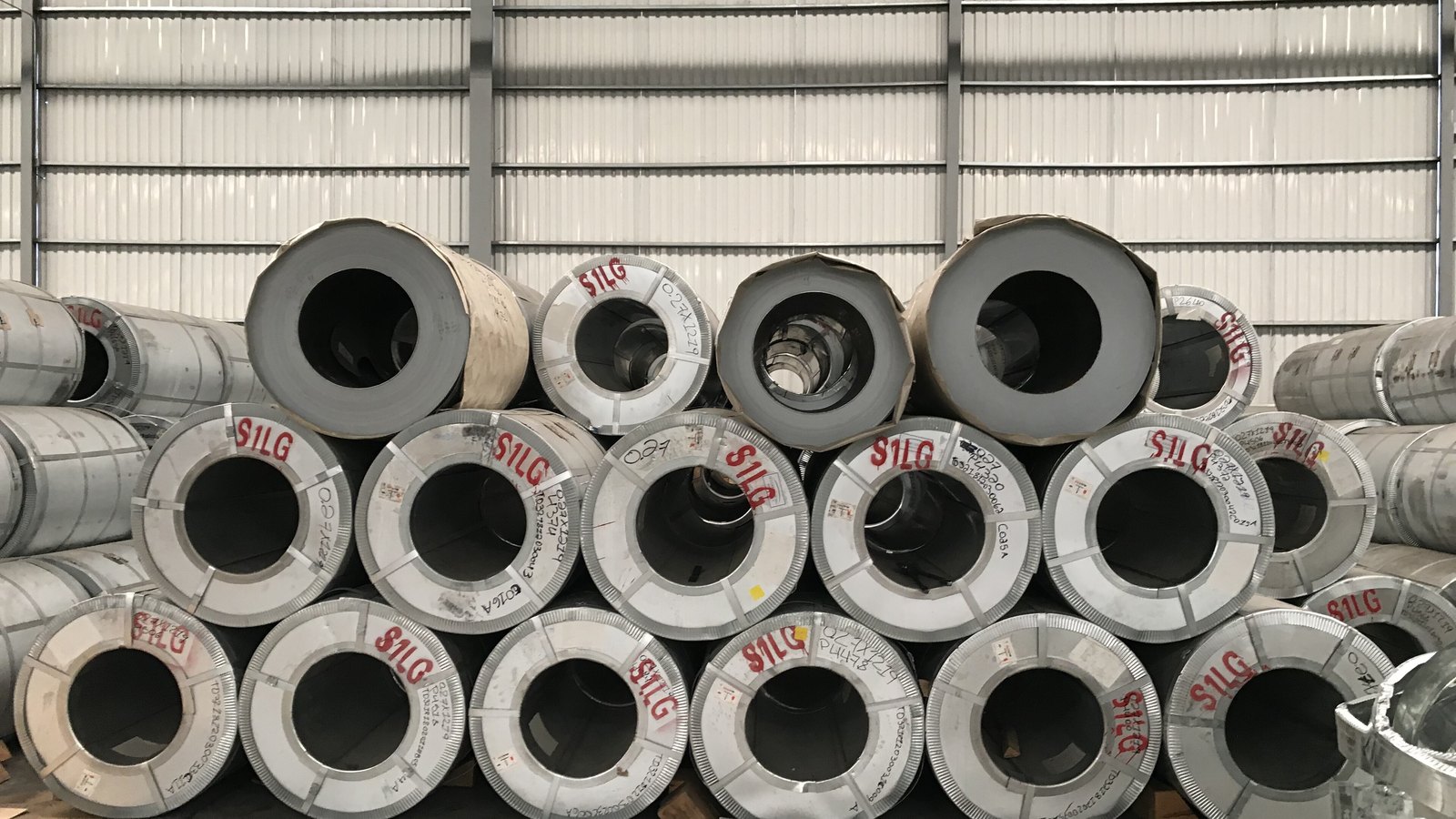
On 23 November 2026, the US Department of Commerce International Trade Administration issued preliminary administrative review results in Federal Register Notice 2026-23802, determining that major South Korean producers received countervailable subsidies on cold-rolled steel flat products. Covering the 2024 calendar year under Docket C-580-882, the decision scrutinises state-backed power tariffs, carbon emissions allowances, and corporate R&D grants, offering critical precedents for materials researchers and university compliance offices.
Administrative Review Findings and Subsidy Rates
The administrative proceeding reviews imports of cold-rolled steel flat products from the Republic of Korea entered between 1 January 2024 and 31 December 2024. Stemming from a countervailing duty order established in September 2016, the review faced procedural delays when Commerce tolled deadlines by 47 days in November 2025 due to a federal funding lapse, followed by 21 additional days to clear an electronic filing backlog. Commerce initiated the review on 8 December 2025 and designated Hyundai Steel Company and POSCO as mandatory respondents in January 2026.
Commerce calculated preliminary net countervailable subsidy rates of 0.66 percent ad valorem for Hyundai Steel Company and 1.10 percent ad valorem for POSCO. Because both rates exceed the 0.50 percent de minimis benchmark under 19 CFR 351.106(c)(1), both exporters will face cash deposit requirements upon final determination. Subsidies granted to affiliated entities were cross-attributed under agency regulations: Hyundai Green Power was attributed to Hyundai Steel, while POSCO’s rate incorporates subsidies to POSCO Future M, POSCO Holdings, POSCO M-Tech, POSCO Mobility Solution, POSCO Nippon Steel RHF Joint Venture, and trading affiliate POSCO International Corporation. Non-reviewed producers remain subject to the 3.89 percent all-others investigation rate.
Key Determination Details and Scope Rescissions
Commerce also partially rescinded the review for 47 South Korean companies. On 5 March 2026, domestic steelmakers Nucor Corporation, Cleveland-Cliffs Inc., Steel Dynamics Inc., and United States Steel Corporation withdrew their review requests for 46 companies within the 90-day window allowed by 19 CFR 351.213(d)(1). With no other requests filed, reviews for those 46 entities were terminated.
A separate rescission applied to KG Dongbu Steel Co., Ltd. Although petitioners withdrew their request, KG Dongbu had requested its own review. However, under 19 CFR 351.213(d)(3), Commerce requires suspended entries during the review period to execute liquidation instructions with US Customs and Border Protection. With zero suspended entries confirmed for KG Dongbu in 2024, Commerce rescinded its review.
| Company Name | Preliminary Subsidy Rate | Affiliates Examined | Status and Legal Basis |
|---|---|---|---|
| Hyundai Steel Company | 0.66% ad valorem | Hyundai Green Power | Actionable rate established above 0.50% de minimis |
| POSCO | 1.10% ad valorem | POSCO Future M, POSCO Holdings, POSCO M-Tech, POSCO Mobility Solution, POSCO International | Actionable rate established above 0.50% de minimis |
| 46 Withdrawn Companies (e.g., AJU Steel, Cenit, Daewoo Logistics, Dai Yang Metal) | N/A (Withdrawn) | None | Rescinded pursuant to 19 CFR 351.213(d)(1) |
| KG Dongbu Steel Co., Ltd. | N/A (No Shipments) | None | Rescinded pursuant to 19 CFR 351.213(d)(3) |
| All-Others Rate | 3.89% ad valorem | All unreviewed Korean producers | Established baseline from 81 FR 64436 |
Scrutiny of Industrial Power, Carbon Allowances, and R&D Grants
The substantive investigation examined three primary government programs: industrial electricity pricing, carbon emission credits, and research grants. Petitioners alleged that state-run utility Korea Electric Power Corporation (KEPCO) supplied electricity to steelmakers below cost. Under 19 CFR Part 351 Subpart E, Commerce evaluates whether government-provided goods or services confer a benefit for less than adequate remuneration by comparing industrial tariff schedules against cost-recovery benchmarks.
Commerce also reviewed South Korea’s Emissions Trading Scheme (K-ETS). Under statutory provisions protecting energy-intensive, trade-exposed manufacturers, Korean authorities allocated 100 percent free emission permits. Trade investigators treat the provision of free allowances beyond normal regulatory thresholds as government revenue foregone under 19 U.S.C. 1677(5)(D). Targeted corporate technology grants administered through the Ministry of Trade, Industry and Energy (MOTIE) were similarly evaluated for specificity under 19 U.S.C. 1677(5A), focusing on whether public funding for decarbonisation and advanced automotive metallurgy favored specific steel producers.
Judicial Precedents and Trade Framework Context
This preliminary ruling builds on years of litigation before the US Court of International Trade. In climate-related trade litigation such as POSCO v. United States, federal judges have repeatedly examined Commerce’s treatment of K-ETS allowances, requiring the agency to clearly distinguish between normal regulatory compliance burdens and countervailable financial contributions.
These disputes operate within the multilateral legal architecture established by the World Trade Organization Agreement on Subsidies and Countervailing Measures. WTO rules permit countervailing duties only when a government provides a financial contribution that confers a specific commercial benefit. As nations expand state financing for industrial decarbonization and green steelmaking, national trade remedy proceedings increasingly scrutinize industrial research support.
Implications for Materials Science and University Research Offices
Commerce’s scrutiny of research subsidies provides actionable lessons for academic metallurgy researchers and university research administration. International research collaborations with foreign industrial partners require precise contractual boundaries. When university engineering departments conduct joint research on high-strength alloys or novel rolling techniques, research offices must ensure that collaborative agreements do not expose academic work to international trade scrutiny.
First, advanced alloy formulations frequently intersect with dual-use controls. Research administrators must verify compliance with export control classification protocols before sharing experimental metallurgical data. Second, universities handling physical alloy specimens or coated sheet samples should implement rigorous material transfer agreements to govern ownership, testing protocols, and downstream commercialization rights.
Third, research security officers must account for foreign government sponsorship under federal directives such as NSPM-33 research security requirements. Faculty participating in international industry-funded projects must disclose foreign financial contributions and in-kind equipment transparently. This contrasts with transparent domestic commercialization frameworks such as Small Business Technology Transfer (STTR), where public-private research partnerships follow explicit federal guidelines designed to commercialise basic research without creating trade-distorting commercial subsidies.
Next Steps in the Enforcement Timeline
Commerce will disclose its preliminary calculations to interested parties within five days of publication, followed by on-site verification of factual questionnaire responses in South Korea under Section 782(i)(3) of the Act. Interested parties may submit administrative case briefs within seven days after the final verification report is issued, with rebuttal briefs due five days later under 19 CFR 351.309(d). Each brief must include an executive summary capped at 450 words per contested issue.
Under 19 CFR 351.213(h)(1), Commerce expects to publish its final results within 120 days of the preliminary notice, targeting April 2027. Final affirmative rates will establish binding cash deposit instructions for US Customs and Border Protection. For the 47 rescinded companies, liquidation instructions will be issued to CBP no earlier than 35 days post-publication to assess duties at entry rates.
Sources
- Federal Register: Certain Cold-Rolled Steel Flat Products From the Republic of Korea: Preliminary Results and Rescission, in Part of Countervailing Duty Administrative Review; 2024, checked 2026-11-28
- Electronic Code of Federal Regulations: 19 CFR Part 351 Subpart E — Identification and Measurement of Countervailable Subsidies, checked 2026-11-28
- Sabin Center for Climate Change Law: POSCO v. United States (K-ETS Emissions Allowance Litigation), checked 2026-11-28
- World Trade Organization: Agreement on Subsidies and Countervailing Measures Gateway, checked 2026-11-28






