
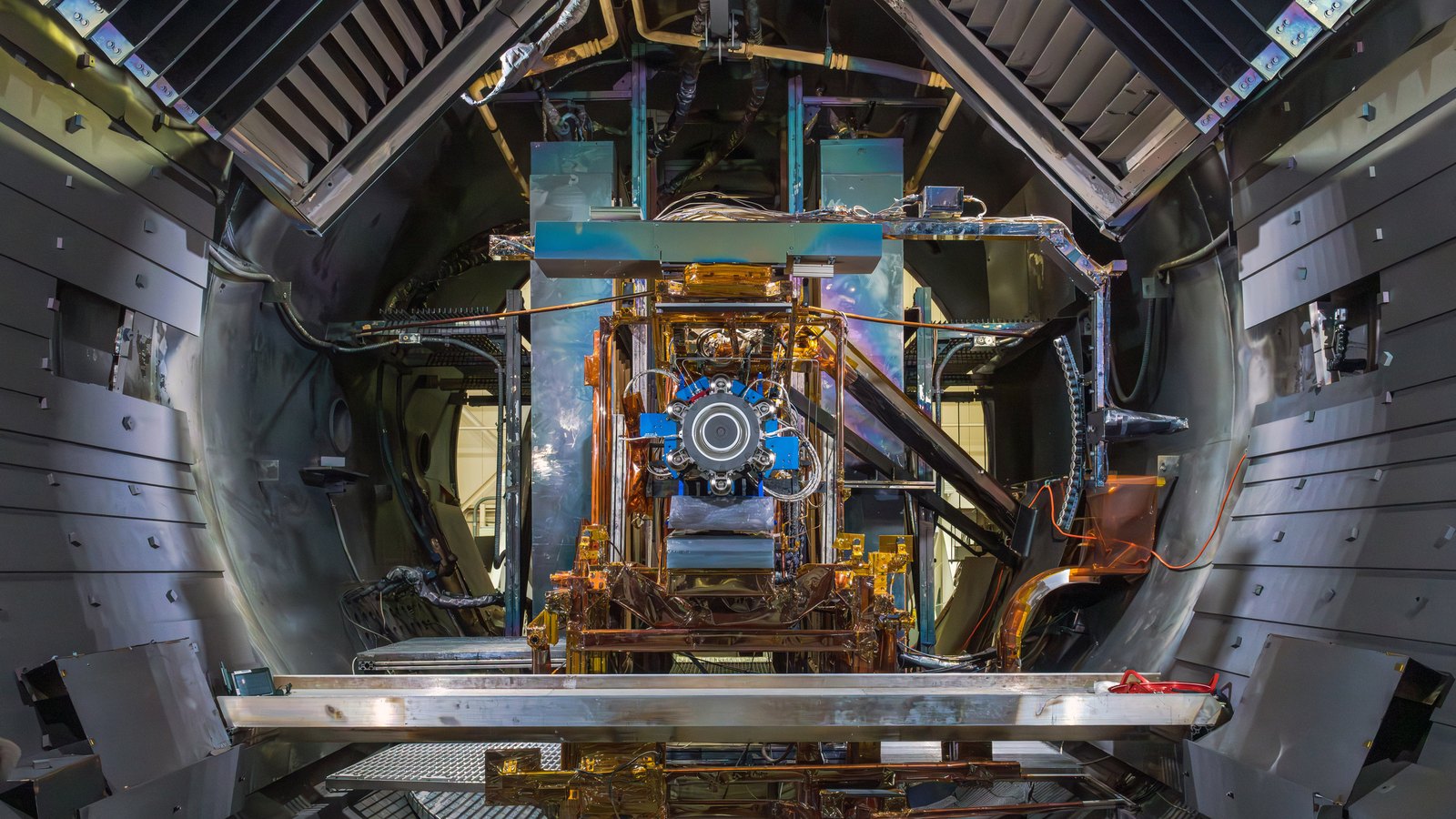
On November 24, 2026, NASA confirmed that mission design teams finalized the spacecraft architecture for the Space Reactor-1 Freedom mission, locking in key propulsion, shielding, and payload configurations following a review at the Glenn Research Center in Cleveland, Ohio. The decision establishes the baseline for a 2028 nuclear electric propulsion flight to Mars, opening vital contracting opportunities for university aerospace faculties, thermal laboratories, and academic research offices.
Finalized Architecture for Space Reactor-1 Freedom
The formal baseline agreement marks a decisive transition for Space Reactor-1 (SR-1) Freedom, moving the pathfinder initiative from early conceptual trade studies into definitive hardware engineering. Convening at NASA Glenn Research Center in Cleveland, engineering representatives from NASA, the U.S. Department of Energy (DOE), and commercial contractors reviewed structural loads, radiation shielding, and mass margins before locking in the flight baseline. The spacecraft is targeted to launch in late 2028 during the Mars transfer window, demonstrating nuclear electric propulsion (NEP) beyond low Earth orbit for the first time.
Program Director Steve Sinacore underscored the strategic importance of the architecture, stating that the project represents the first operational freight flight on the logistical network of the solar system. First introduced by NASA Administrator Jared Isaacman at the agency’s Ignition conference in March 2026, the mission demonstrates continuous fission power in environments where solar irradiance declines sharply, establishing standard interfaces for future deep-space exploration.
Engineering Specifications, Shielding Upgrades, and Subcontract Allocations
The updated configuration incorporates several structural refinements to optimize mass and assembly. Design teams approved a shorter boom separating the forward reactor from the main Power and Propulsion Element (PPE). Joint NASA and DOE radiation modeling demonstrated that enhanced shadow shielding allows the reactor to operate closer to the bus, reducing overall structural mass while protecting payload electronics.
Communications on the PPE have also been modified with larger high-gain X-band dish antennas to maintain high-rate telemetry across deep space. To manage thermal loads, NASA awarded a $39.3 million contract under the Aerospace Research, Development, and Engineering Support II (ARDES II) vehicle to the Johns Hopkins University Applied Physics Laboratory (JHU APL). JHU APL will design, fabricate, and qualify the heat rejection system, partnering with Advanced Cooling Technologies to provide specialized heat pipes and composite radiator panels.
In Mars orbit, the spacecraft will release the SkyFall science payload, an atmospheric entry capsule carrying three autonomous rotorcraft. In an analysis of the mission profile, Ars Technica reported on the helicopter scout architecture, highlighting how aerial platforms provide regional exploration without heavy rover infrastructure. The helicopters will deploy mid-air to map shallow water ice and assess future landing sites.
| Subsystem Component | Technical Baseline Configuration | Lead Entity / Commercial Subcontractor | Primary Mission Function |
|---|---|---|---|
| Nuclear Power Module | High-Assay Low-Enriched Uranium core with closed Brayton cycle conversion | NASA Glenn Research Center / U.S. Department of Energy | Generates over 20 kWe of continuous electrical power for propulsion and bus systems |
| Heat Rejection Subsystem | High-temperature heat pipes and lightweight composite radiator panels | Johns Hopkins University Applied Physics Laboratory / Advanced Cooling Technologies | Dissipates reactor conversion waste heat ($39.3M ARDES II contract award) |
| Power and Propulsion Element | High-power Hall-effect thrusters and upgraded high-gain X-band antennas | NASA Glenn Research Center / Commercial Industrial Partners | Provides continuous electric propulsion transit and long-range telemetry links |
| Structural Separation Boom | Compact structural boom with integrated radiation shadow shielding | NASA / Department of Energy Design Team | Maintains radiation protection for avionics while reducing structural dry mass |
| SkyFall Planetary Payload | Three autonomous scout rotorcraft inside an entry capsule | NASA Jet Propulsion Laboratory / AeroVironment | Executes mid-air deployment at Mars to survey subsurface ice and scout landing terrain |
Programmatic Evolution from Gateway Heritage to Deep-Space Fission
The SR-1 Freedom architecture repurposes propulsion and bus designs originally developed for lunar Gateway infrastructure. As reported when SpaceNews examined efforts to streamline the nuclear electric propulsion mission, agency leadership adapted mature commercial hardware to maintain the ambitious 2028 launch schedule.
The project represents the first operational U.S. space fission mission since SNAP-10A in 1965. Ground demonstrations at NASA Glenn’s Electric Propulsion and Power Laboratory proved that high-power Hall thrusters operate reliably for thousands of hours under vacuum. SR-1 Freedom will validate these systems in flight across each technology readiness level (TRL), establishing fission power as a practical alternative to solar arrays beyond Earth orbit.
Agency Leadership and Nuclear Engineering Perspectives
The architectural milestone was widely analyzed across the aerospace and nuclear engineering sectors. Specific technical trade-offs were discussed when an American Nuclear Society panel examined space reactor instrumentation and controls at its Winter Conference in Phoenix, Arizona.
During the session, technical leads emphasized the distinction between terrestrial and space nuclear systems. Dianne Ezell, SR-1 Freedom lead at Idaho National Laboratory (INL), and Frank Whitworth, deputy spacecraft lead at NASA Johnson Space Center, noted that strict mass limits dictate every aspect of space reactor design. Because space systems cannot accommodate massive concrete shielding, instrumentation and controls must be radiation-hardened to survive high gamma and neutron exposure while maintaining autonomous operational integrity.
Implications for University Engineering Faculties and Research Administration
Locking in the SR-1 Freedom architecture establishes concrete pathways and compliance requirements for academic research institutions. The $39.3 million award to JHU APL illustrates how university-affiliated laboratories serve as prime contractors for complex flight hardware. Academic institutions managing prime contracts must implement a formal small business subcontracting plan to govern industrial partnerships with specialized suppliers like Advanced Cooling Technologies.
When universities issue or receive research subcontracts, sponsored programs offices must structure each bilateral subaward with precision. Clear milestone schedules, export control protocols, and data delivery terms are required to safeguard academic intellectual property while fulfilling federal reporting mandates.
Furthermore, participation in space nuclear research demands strict adherence to federal procurement for research institutions. Hardware components, reactor modeling software, and electric thruster diagnostics fall under International Traffic in Arms Regulations (ITAR) and Export Administration Regulations (EAR), requiring university research security personnel to manage facility access and protect technical data. Concurrently, planetary science faculties can align post-doctoral and graduate research with the mission’s 2030 Martian science operations.
Upcoming Milestones and Path to Late 2028 Launch
Following the architectural review, engineering teams will complete preliminary design reviews across major subsystems throughout 2027. Key technical milestones include finalizing the radiator deployment mechanism, locking in thermal loop operating pressures, and verifying heat pipe performance under flight-representative thermal-vacuum conditions.
Upon launch in late 2028, SR-1 Freedom will activate its reactor after clearing Earth orbit, gradually ramping thermal power to validate the Brayton conversion cycle. The reactor will complete an initial test run before shutting down for the solar-powered cruise to Mars. Following arrival in 2030 and SkyFall payload deployment, controllers will restart the fission system for extended deep-space testing, generating operational data that will directly guide NASA’s planned Lunar Reactor-1 (LR-1) surface power project.
Sources
- NASA: Teams Lock in Mission Architecture for NASA’s SR-1 Freedom, checked 2026-11-25
- American Nuclear Society: Space reactor panel discusses SR-1 Freedom mission and design considerations, checked 2026-11-25
- SpaceNews: NASA working to streamline development of nuclear electric propulsion demo mission, checked 2026-11-25
- NASA Science: SkyFall, checked 2026-11-25
- Ars Technica: Without new landers or rovers, it’s helicopters or bust for NASA’s Mars program, checked 2026-11-25






