
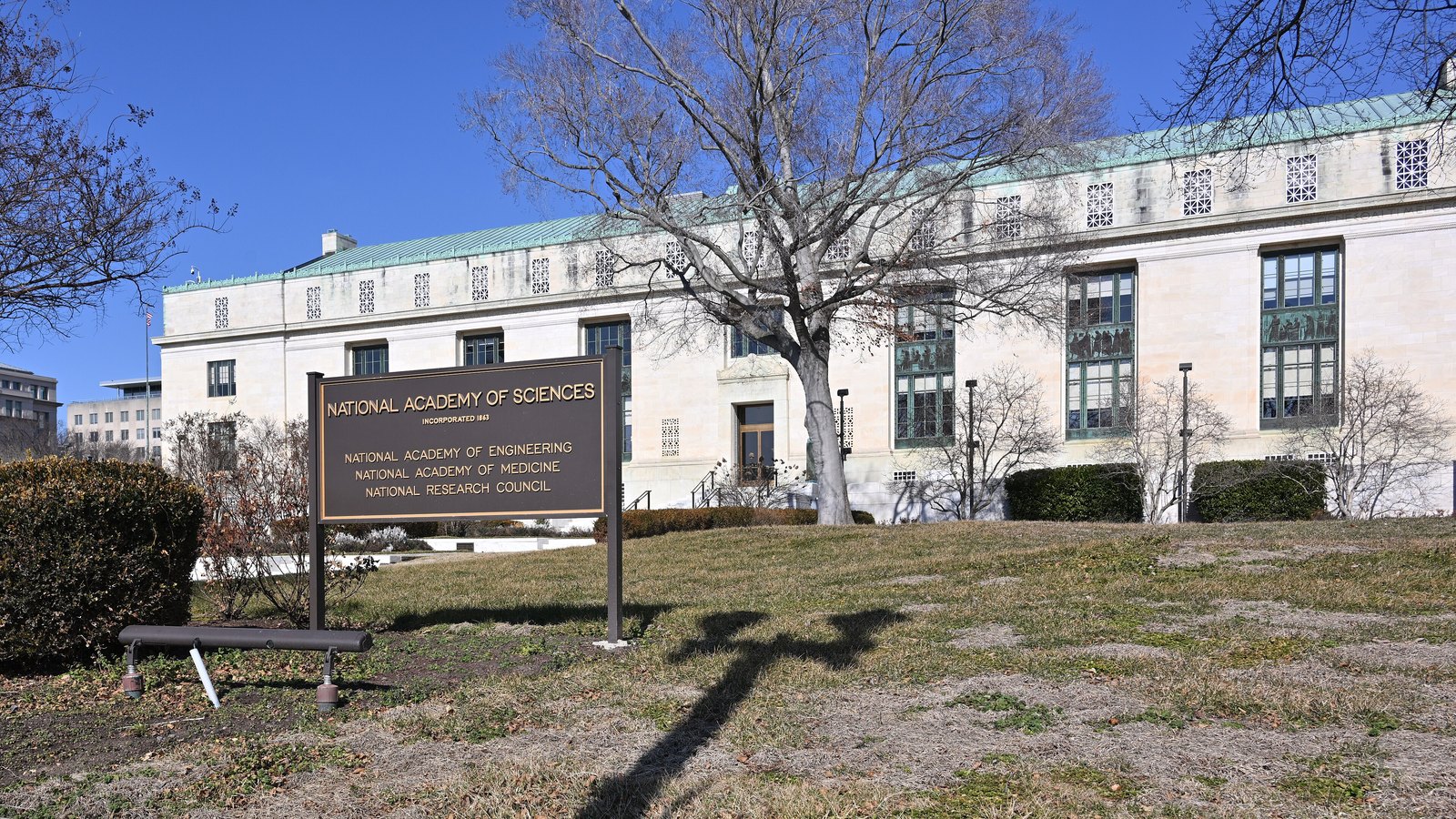
The National Academies of Sciences, Engineering, and Medicine began work in November 2026, at NASA’s request, on the next Earth science decadal survey, which will recommend priorities for NASA’s Earth observations from 2028 to 2037. NASA says the committee will draw on academia, commercial Earth observation providers and sectors such as agriculture, insurance, finance and energy.
What happened
NASA’s Decadal Survey 2028 page states that, in November 2026, at NASA’s request, the National Academies is kicking off activities for the Decadal Survey for Earth Science and Applications from Space 2028-2037, known as ESAS 2028. NASA says it relies on the Academies to identify and prioritise the most complex Earth science and applications questions and the observations needed to answer them.
NASA Watch reported the start on 18 November 2026. An Academies committee will weigh the work of its appointed study panels and working groups, and input from the wider community, before it reaches consensus recommendations.
Key details
NASA lists the inputs it expects: academia, the private sector, non-profits, other government agencies, commercial Earth observation providers, operational sectors such as agriculture, insurance, finance and energy, and what the page calls emerging Earth science applications users outside the traditional scientific community. The NASA Earth Science Division is supplying the committee and its panels with reference documents for programmatic context. According to NASA Watch they include the Earth Science to Action Strategy 2024-2034, a look back at the 2017-2027 survey and the NASA-U.S. Geological Survey land imaging strategy, as well as NASA’s Low Earth Orbit Microgravity Strategy and its Moon Base resources page. NASA says more documents will be added as they are cleared for public release, and kickoff presentations will be posted on the page.
The committee was formed earlier. A University of Colorado Boulder article of 21 October 2026 says Professor Steve Nerem is co-chairing the committee, which is made up of scientists, engineers, and industry and nonprofit leaders. It says the committee will spend the next year reviewing NASA’s existing infrastructure and developing a strategy, and that it had received more than 250 white papers covering mission priorities, new instruments and areas facing gaps as existing satellites reach the end of their lives. The article adds that NASA’s Earth Science Division operates 20 orbiting satellites.
Background and context
The new survey builds on the 2017-2027 survey. NASA Watch summarised where that survey’s main priorities stand, based on NASA’s own look back:
| 2017-2027 survey priority | Where it stands, per NASA Watch |
|---|---|
| Surface deformation and change | Covered by NISAR, the radar satellite NASA built with India’s space agency, launched 30 July 2025; NASA dropped plans for a mission of its own |
| Mass change | GRACE-C, built with Germany, scheduled to launch in December 2028; the midterm assessment found its cost above the survey’s cap for this measurement |
| Surface biology and geology | Reworked this year as EAGLE, two satellites carrying an imaging spectrometer and a thermal radiometer, after the fiscal 2026 budget request proposed cancelling the mission |
| Aerosols; clouds, convection and precipitation | Reworked this year as FALCON, with a lidar and a cloud radar, after the same budget request targeted it |
| Earth System Explorers | The survey called for three opportunities; NASA held one competition and selected STRIVE and EDGE in February, for launch no earlier than 2030 |
| Incubation (planetary boundary layer; surface topography and vegetation) | NASA says both are progressing toward on-orbit validation |
NASA says it has advanced all five priority measurements, often by shrinking or splitting missions or leaning on partners, and NASA Watch reports that the agency now calls its early cost estimates “overly ambitious”. It also cites the National Academies’ 2024 midterm assessment, which found the Earth Science Division working with a budget that had been essentially flat since 2015 while mission costs climbed.
On 19 October 2026 NASA’s Office of Inspector General published an audit, NASA’s Role in the Decadal Survey Process (IG-27-001). It found that the design of the process and NASA’s approach limit opportunities for the agency to communicate with the Academies, and that NASA is not comprehensively capturing progress, costs and resources for the process. NASA Watch adds that division officials told auditors the Academies often take two years to finish a survey while giving NASA less than 10 days to review the prepublication report.
Reaction
Nerem described the task in the CU Boulder article: “NASA can’t do everything, so this group has to prioritize Earth science as a whole.” He also said that “everyone in the research community has individual opinions on what is most important.”
NASA Watch said in its commentary that the survey starts at an awkward time, nearly nine years after the last one, with most of its priority missions still years from launch after descopes, splits and renames. It noted that Terra goes dark on 1 December after 27 years, and argued that the committee’s job is to make sure the science still sets the priorities.
What it means for researchers, universities and research offices
A decadal survey sets the list that later mission, instrument and programme choices are measured against, so Earth science groups should follow the ESAS 2028 page for the background documents and kickoff presentations that NASA says it will post. Faculty planning instrument concepts, missions or long-term observing programmes can use the survey’s stated inputs, including commercial and applications users, to show where their work fits. NASA’s ROSES solicitations and the Earthdata infrastructure that supports Earth science are the programmes and data services most directly shaped by these priorities.
Research offices at universities with Earth observation, geodesy or remote sensing programmes can note that the committee is open to evidence from outside academia, which makes partnerships with agencies, insurers and utilities relevant to how a department presents its case. Casrai’s guide to the Astro2020 decadal survey shows how the same process has worked in astronomy, and the overview of remote sensing research areas and funding covers the field the survey addresses.
What happens next
According to the CU Boulder article, the committee will review NASA’s existing infrastructure and develop its strategy over the next year. NASA says it will add kickoff presentations and further reference documents to its ESAS 2028 page as they become available for public release. The survey’s recommendations cover NASA’s Earth observations from 2028 through 2037.
Sources
- NASA Science: Decadal Survey 2028, November 2026, checked 2026-11-19
- NASA Watch: Next Earth Science Decadal Survey Begins, 18 November 2026, checked 2026-11-19
- University of Colorado Boulder: CU Boulder professor co-chairing major National Academies study for NASA, 21 October 2026, checked 2026-11-19
- NASA Office of Inspector General: NASA’s Role in the Decadal Survey Process, 19 October 2026, checked 2026-11-19


