
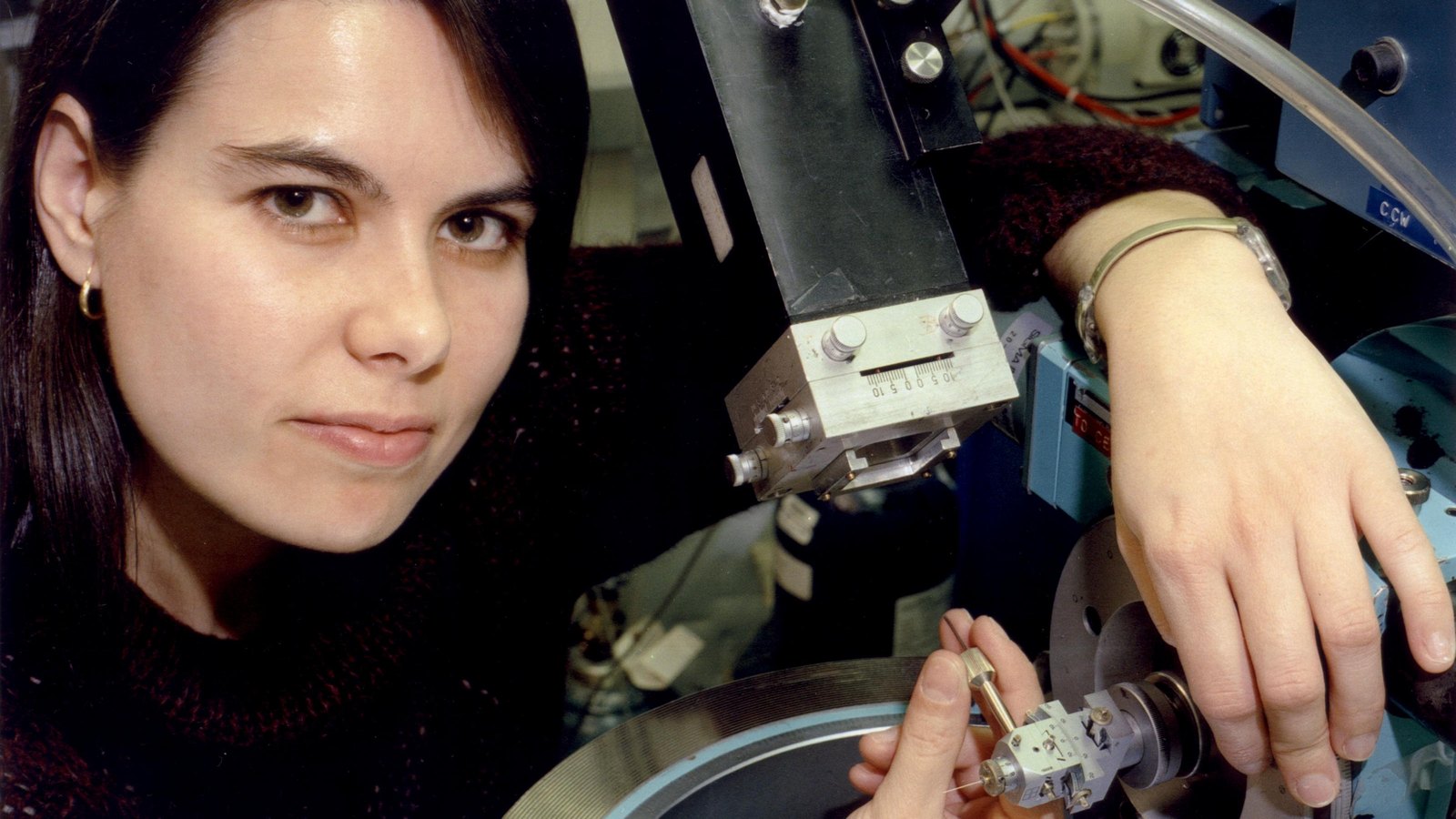
On November 19, 2026, the National Institute on Aging awarded a $410,351 R21 Exploratory/Developmental Research Grant to bioengineers at North Carolina A&T State University in East Greensboro, North Carolina, as announced in an official institutional notice, funding noninvasive focused ultrasound engineering to accelerate convective fluid transport and metabolic waste clearance across the brain’s glymphatic system without surgical intervention.
Federal Award for Focused Ultrasound Glymphatic Engineering
The two-year exploratory project is directed by Dr. Muna Aryal, an assistant professor of bioengineering in the Department of Chemical, Biological, and Bioengineering within the College of Engineering at North Carolina Agricultural and Technical State University. Serving as principal investigator, Dr. Aryal will develop and validate a noninvasive, low-intensity ultrasound technique that integrates acoustic radiation force with mathematical modeling, microfluidic organ-on-a-chip platforms, and preclinical rodent studies to accelerate the clearance of neurotoxic proteins from cerebral tissue.
The central nervous system relies on the glymphatic network, a macroscopic glia-mediated pathway where cerebrospinal fluid exchanges with interstitial fluid along perivascular channels surrounding cerebral arteries. While peripheral organs depend on conventional lymphatic vessels and lymph nodes to remove cellular debris, the brain utilizes this convective transport mechanism to eliminate metabolic waste. During aging, the natural drainage mechanics of the glymphatic system degrade, allowing macromolecular aggregates, including amyloid-beta peptides, to accumulate within parenchymal spaces.
In her grant proposal, Dr. Aryal articulated the core clinical and engineering challenge: “The glymphatic system, which is responsible for clearing waste products such as amyloid beta from the brain, plays a crucial role in the progression of brain disease,” she stated. “This system struggles with the clearance of larger molecules, like amyloid plaques, leading to disease exacerbation. Lymph nodes help the body fight infection; however, the brain uses the glymphatic system to clear waste material. This system is responsible for removing toxic proteins that cause neurodegenerative diseases. I’m using ultrasound to accelerate the flow to find better treatment for the brain.”
Technical Specifications and Funding Mechanism Architecture
The $410,351 award is administered under the National Institutes of Health R21 Exploratory/Developmental Research Grant mechanism, codified on the official NIH Grants and Funding portal. The R21 mechanism supports early-stage, exploratory research projects that carry substantial technical novelty and high discovery potential, even in the absence of extensive preliminary experimental datasets.
Under NIH parent guidelines, direct costs for R21 grants are capped at $275,000 across the entire two-year grant period, with a maximum of $200,000 permitted in any single budget year. The total award volume of $410,351 combines approved direct costs allocated toward acoustic hardware, microfluidic supplies, and personnel with North Carolina A&T’s federally negotiated facilities and administrative indirect cost rates. Unlike the standard R01 NIH research project grant, which requires rigorous preliminary data and supports multi-year programs of up to five years, R21 awards provide seed funding designed to test proof-of-concept feasibility and position novel platforms for competitive renewal under larger institutional mechanisms.
The table below outlines key operational and administrative parameters comparing the NIH R21 mechanism governing this award with standard R01 project grants:
| Mechanism Attribute | NIH R21 Exploratory Grant (Current Award) | NIH R01 Research Project Grant |
|---|---|---|
| Primary Research Purpose | Exploratory, high-risk conceptual proof-of-concept and technical methodology | Hypothesis-driven, mature research programs with extensive preliminary verification |
| Maximum Award Duration | 2 years (non-renewable) | 3 to 5 years (competitively renewable) |
| Direct Cost Ceilings | $275,000 combined maximum ($200,000 single-year maximum cap) | Modular increments up to $250,000 annually; larger budgets permitted with prior approval |
| Preliminary Data Policy | Explicitly not required by NIH parent guidelines, though permitted | Essential; peer-review scoring depends heavily on preliminary substantiation |
| Application Strategy Page Limit | 6 pages (Research Strategy section) | 12 pages (Research Strategy section) |
| Current Award Financial Profile | $410,351 total costs spanning direct project support and negotiated institutional F&A | Typically $1.5 million to $2.5 million+ in combined direct and indirect allocations |
Mechanics of Glymphatic Clearance and Ultrasonic Induction
Cerebral interstitial waste clearance is governed by convective fluid movement through periarterial spaces bounded by astrocytic vascular endfeet expressing aquaporin-4 water channels. Cerebrospinal fluid flows through the extracellular matrix, collecting soluble metabolites before draining into perivenous conduits and deep cervical lymph nodes. In aging tissue, reduced arterial compliance diminishes the pulsatile pressure gradients that drive convective flow, leading to diffusive stagnation and protein accumulation.
Low-intensity focused ultrasound delivers non-thermal acoustic radiation forces directly to targeted regions of the central nervous system. Earlier preclinical studies documented by the Focused Ultrasound Foundation showed that noninvasive transcranial acoustic pulses generate localized micro-streaming and cyclic acoustic pressure gradients that enhance perivascular fluid transport. These acoustic oscillations safely accelerate tracer movement through periarterial channels into deeper parenchymal structures without breaching blood-brain barrier vascular integrity or inducing focal tissue heating.
Complementary bioengineering studies, including findings reported by the WashU McKelvey School of Engineering, demonstrate that targeted acoustic pulses can enhance fluid convective velocities through complex cerebral micro-architectures. By integrating ultrasound transducers with real-time acoustic beam steering and microfluidic organ-on-a-chip validation, Dr. Aryal’s project aims to systematically characterize how wave frequency, pulse repetition, and acoustic pressure affect hydrodynamic resistance in perivascular conduits.
Institutional and Academic Leadership Commentary
University leadership highlighted the strategic value of establishing noninvasive acoustic engineering capabilities at North Carolina A&T. Dr. Salil Desai, associate dean for research and innovation in the College of Engineering, noted the broader institutional impact:
“This technique could be the future of biomedical discovery,” Dr. Desai said. “In addition, it will strengthen collaborations within our university’s rich ecosystem and foster new partnerships with medical schools and health care systems in the area, and that is a long-term impact.”
The College of Engineering emphasized that Dr. Aryal’s laboratory bridges physical acoustics, computational fluid mechanics, and microscale biomedical devices within the Department of Chemical, Biological, and Bioengineering. As the nation’s largest historically Black university, North Carolina A&T’s land-grant mission prioritizes translating advanced technological breakthroughs into equitable, accessible therapeutic alternatives that serve diverse patient demographics and historically underserved populations.
Implications for University Research Offices and Laboratory Operations
The administration of this R21 award highlights key operational considerations for university sponsored programs offices, research administrators, and biomedical laboratory directors:
- R21 Budget Allocation and Personnel Management: Because the R21 direct-cost ceiling is strictly capped at $275,000 over 24 months, research administrators must help principal investigators balance capital investments in ultrasound transducers with graduate and postdoctoral personnel salaries.
- Dual Compliance for In Vivo and In Vitro Acoustic Protocols: Projects pairing in vivo animal imaging with acoustic exposure require synchronized compliance reviews across Institutional Animal Care and Use Committees (IACUC) and radiation safety oversight committees.
- Institutional Research Competitiveness: Winning competitive exploratory awards from the National Institute on Aging demonstrates how engineering departments outside academic medical centers can capture federal biomedical awards, as detailed in analyses of NIH funding by institution.
- Data Management and Computational Model Sharing: In compliance with the NIH Data Management and Sharing Policy, teams combining artificial intelligence models with acoustic fluid simulations must establish curated repositories to preserve raw hydrodynamic measurements and numerical simulation code.
Project Milestones and Translational Trajectory
Over the 24-month award timeline, Dr. Aryal and her research team will progress through structured technical milestones to validate the acoustic clearance platform:
- Phase 1 (Months 1–12): Numerical Modeling and Benchtop Microfluidic Validation: The initial phase focuses on multiphysics finite-element modeling of acoustic propagation through cranial bone phantoms, alongside microfluidic organ-on-a-chip testing to determine pressure thresholds that optimize fluid transport while ensuring cell viability.
- Phase 2 (Months 13–24): Preclinical Murine Clearance Mapping: The subsequent phase transitions the optimized protocols into preclinical rodent models, using optical imaging and fluorescent macromolecular tracers to quantify real-time interstitial fluid clearance rates and verify histological safety.
Successful completion of these exploratory milestones will provide the preliminary data necessary to support multi-year federal grant submissions, expanded inter-institutional clinical trials, and intellectual property filings for noninvasive acoustic brain clearance technologies.
Sources
- North Carolina A&T State University: Bioengineer Receives $410K Grant to Advance Brain Health Research, checked 2026-11-25
- National Institutes of Health: NIH Exploratory/Developmental Research Grant Program (R21), checked 2026-11-25
- Focused Ultrasound Foundation: Focused Ultrasound—Enhanced Drug Delivery Using The Glymphatic System, checked 2026-11-25
- WashU McKelvey School of Engineering: Insight into brain’s waste clearing system may shed light on brain diseases, checked 2026-11-25






