
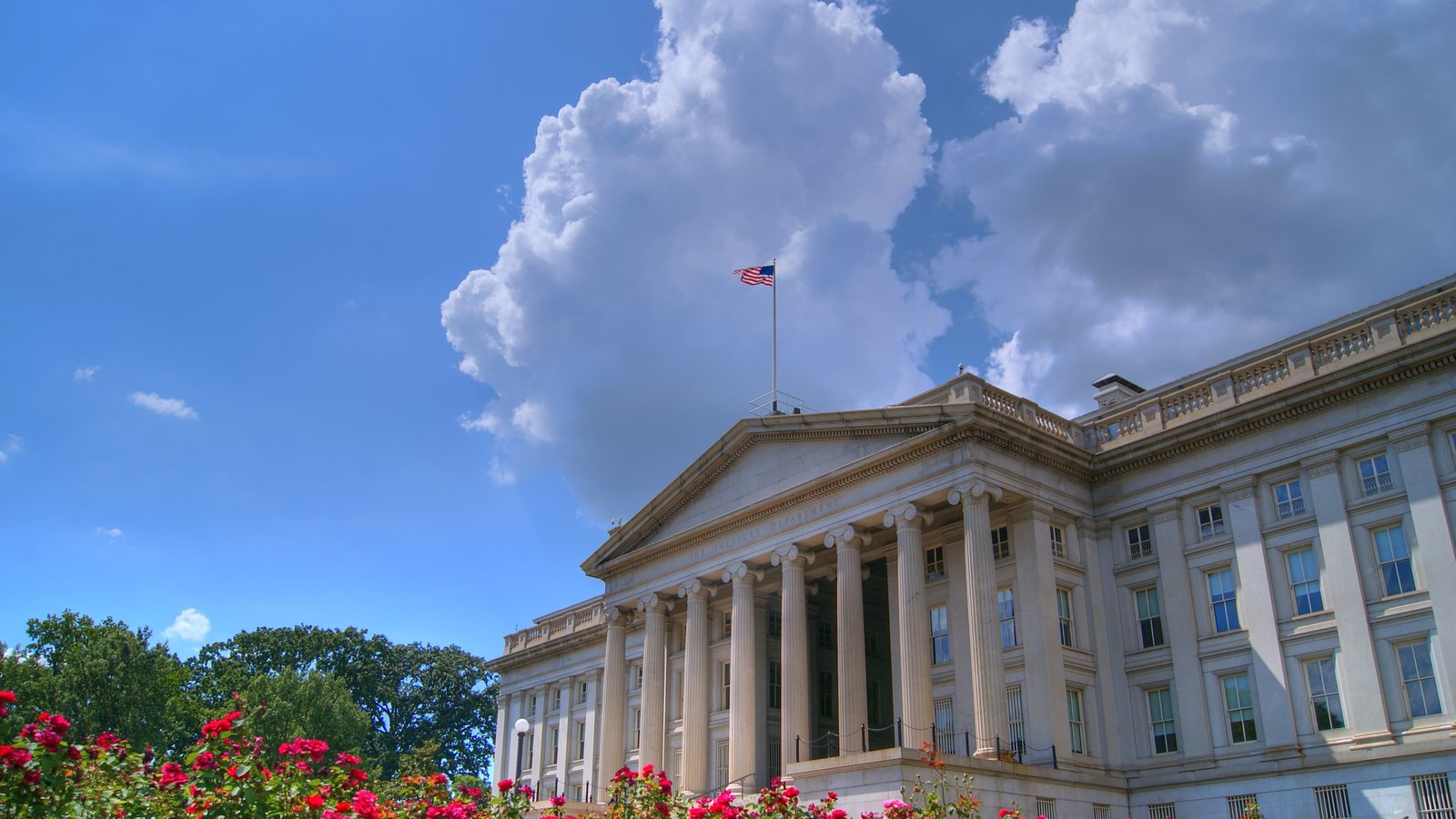
On November 25, 2026, the U.S. Department of the Treasury issued a formal notice in Washington seeking public comment on the information collection and recordkeeping obligations governing the $10 billion Coronavirus Capital Projects Fund, establishing multi-year compliance parameters for university research networks, state broadband authorities, and sponsored projects administrators.
Treasury Seeks Public Comment on Capital Projects Fund Information Collection
The U.S. Department of the Treasury Departmental Offices published Federal Register Public Inspection Notice 2026-24020 under the Paperwork Reduction Act of 1995 (44 U.S.C. 3501 et seq.) to extend without change the reporting framework for the Coronavirus Capital Projects Fund (CPF). Managed under Office of Management and Budget (OMB) Control Number 1505-0277, the information collection renewal governs $10 billion in capital infrastructure grants authorized by Section 604 of the Social Security Act, as added by Section 9901 of the American Rescue Plan Act of 2021 (Public Law 117-2).
The program delivers payments to 609 eligible governmental recipients: all 50 states, the District of Columbia, Puerto Rico, seven territories and freely associated states (the U.S. Virgin Islands, Guam, American Samoa, the Northern Mariana Islands, the Marshall Islands, Micronesia, and Palau), and Tribal governments. CPF funds enable capital projects that directly support work, education, and health monitoring, including remote access, in response to the COVID-19 pandemic.
Treasury PRA Clearance Officer Spencer W. Clark reported that the information collection entails 30,352 aggregate annual burden hours across 845 separate filings. Per-respondent burden ranges from 20 to 80 hours annually depending on project scale and reporting tier. The 60-day comment period invites input on practical utility, burden accuracy, data clarity, and technological burden reduction.
Mandatory Reporting Filings, Closeout Deadlines, and Asset Retention Rules
Grant recipients fulfill compliance obligations through quarterly Project and Expenditure (P&E) Reports and Annual Performance Reports. Under the published Treasury Compliance and Reporting Guidance, these filings record cumulative obligations, subrecipient disbursements, milestone achievements, and geospatial location data for broadband builds using Federal Communications Commission (FCC) identifiers.
The notice confirms that the period of performance for all Capital Projects Fund grants ends on December 31, 2027. Grantees must submit final administrative closeout reports by April 20, 2028. Recipients and subrecipients must also retain all program and financial records for five years following final expenditure report submission, establishing an audit readiness mandate through April 2033.
| Regulatory Parameter | Statutory and Administrative Rule | Operational Scope and Entity Impact |
|---|---|---|
| Authorizing Statute | ARP Act Sec. 9901; Social Security Act Sec. 604 | $10 billion capital allocation across states, territories, and Tribes |
| OMB Collection | Control Number 1505-0277; Extension without change | Mandatory quarterly and annual reporting instruments |
| Covered Grantees | 609 governmental recipients nationwide | 50 states, DC, Puerto Rico, 7 territories, and Tribal entities |
| Annual Burden | 845 annual submissions; 30,352 burden hours | 20 to 80 hours per response depending on project scale |
| Closeout Schedule | Performance ends Dec. 31, 2027; closeout April 20, 2028 | Final reconciliations and property closeout filings |
| Record Retention | Five-year post-closeout documentation standard | Record retention and audit readiness required through April 2033 |
Program Evolution and Synergy with Federal Broadband Deployment
Congress established the Capital Projects Fund to resolve structural disparities in high-speed connectivity and modern public facilities. Treasury guidance prioritized capital infrastructure delivering symmetrical 100 megabit-per-second broadband speeds to unserved and underserved communities.
Because Treasury rolled out CPF funding ahead of later initiatives—such as the $42.45 billion Broadband Equity, Access, and Deployment (BEAD) program under the Infrastructure Investment and Jobs Act—states utilized the fund as an immediate bridge for shovel-ready builds. For example, California directed more than $540 million in CPF grants to its last-mile broadband initiative, as documented in StateScoop coverage of Treasury broadband expansion.
Beyond commercial broadband, states allocated CPF investments toward multi-purpose community facilities and digital connectivity technology. These investments established community computer centers, university extension classrooms, and telehealth hubs requiring technical collaboration among municipal authorities, academic institutions, and regional networks.
State Broadband Offices and Higher Education Stakeholders Respond
State broadband leaders have emphasized the need for administrative clarity as multi-million-dollar capital deployments enter final construction phases. At policy convenings, including the National Governors Association convenings of state broadband leaders, state officials underscored that streamlined reporting and bulk-data templates are essential to meeting federal deadlines.
Higher education institutions and regional research and education networks (RENs) have engaged state agencies to connect research hubs and anchor institutions. Consortia such as Internet2 and The Quilt have advocated that national broadband funding must support campus cyberinfrastructure and high-capacity research networks, as detailed by Internet2 on research and education infrastructure.
For universities hosting regional digital clinics or extension centers funded through CPF subawards, coordination between state broadband offices and university sponsored programs teams has centered on data verification, equipment tracking, and subgrantee accounting.
Compliance Obligations for University Research Networks and Sponsored Programs
For academic institutions, research facilities, and higher education consortia participating in Capital Projects Fund programs, awards carry strict federal post-award mandates under 2 CFR 200 Subpart D post-award requirements. Sponsored programs offices must maintain compliance across procurement integrity, cost allowability, and property management through 2033.
University offices managing external collaborations or subrecipient institutions must conduct formal subrecipient monitoring. Pass-through entities must evaluate subrecipient financial risk, track programmatic milestones, and enforce 2 CFR Part 200 Subpart E cost principles. When issuing an individual subaward for fiber extension or hardware deployment, universities must include mandatory flow-down clauses and federal audit access provisions.
Additionally, institutions must adhere to transparency reporting under the Federal Funding Accountability and Transparency Act (FFATA), submitting required executive compensation and subaward data through FSRS reporting. Tangible equipment and capital fiber assets must be inventoried in compliance with 2 CFR 200.313 and subjected to institutional Single Audits under 2 CFR Part 200 Subpart F.
Upcoming Milestones and Next Steps for Grant Administrators
Notice 2026-24020 establishes a clear timeline of upcoming milestones for Capital Projects Fund recipients and subrecipients:
- Public Comment Window (November 2026 – January 2027): Stakeholders have 60 days following the November 25, 2026 Federal Register publication to submit comments to Treasury PRA Clearance Officer Spencer W. Clark at [email protected] regarding reporting burden and portal workflows.
- Quarterly Project and Expenditure Filings (2026 – 2027): Grantees must submit quarterly progress data, capital outlays, and FCC-mapped broadband location points through Treasury’s portal.
- Period of Performance Sunset (December 31, 2027): All infrastructure builds, facility renovations, and technology purchases must be fully completed and obligations incurred.
- Final Closeout Report Deadline (April 20, 2028): Grantees must file final reconciliations, property disposition reports, and performance closeout documentation.
- Five-Year Record Retention Window (April 2028 – April 2033): Institutions must retain all procurement, subaward, and financial records for five years following final expenditure reporting to support federal Single Audits.
Sources
- Federal Register: Public Inspection: Agency Information Collection Activities; Proposals, Submissions, and Approvals: Coronavirus Capital Projects Fund Reporting and Recordkeeping, checked 2026-11-25
- U.S. Department of the Treasury: Recipient Compliance and Reporting Responsibilities, checked 2026-11-25
- Internet2: The Minds We Need: Federal Broadband Investment Should Include Research and Education Infrastructure, checked 2026-11-25
- National Governors Association: NGA Convenes Broadband Leaders to Promote Workforce and Community Development in States and Territories, checked 2026-11-25
- StateScoop: California collects $540M for high-speed internet expansion, checked 2026-11-25






