
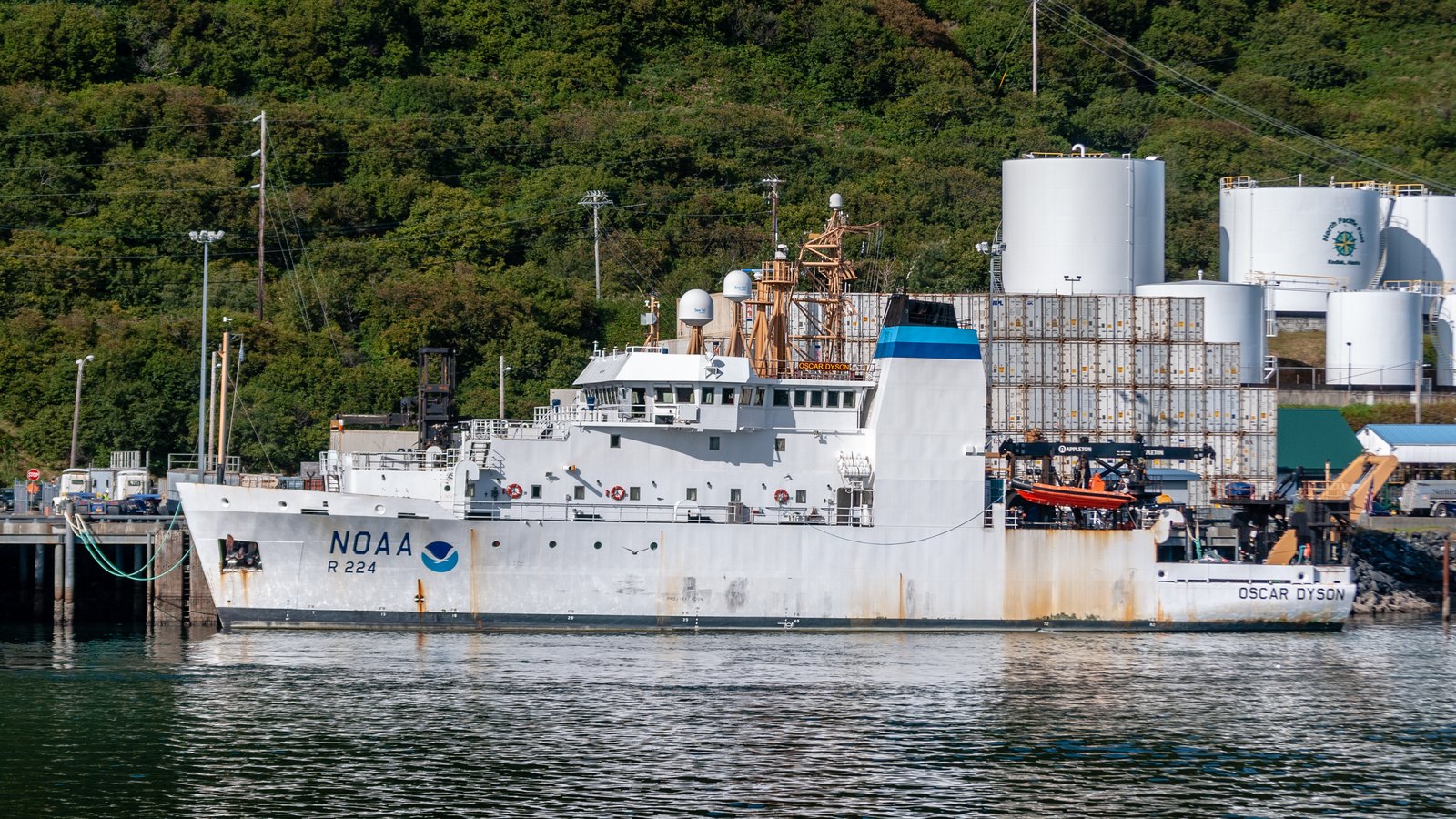
On November 25, 2026, NOAA’s National Marine Fisheries Service published Federal Register Document 2026-24156, setting 2026 cost recovery fee percentages and standard ex-vessel prices for four limited access privilege and community quota programs in the Bering Sea and Aleutian Islands. The annual determination directly finances regulatory management, scientific observer deployments, and marine stock assessment data collection, shifting dedicated operational funding across university research partnerships and fisheries management offices that support North Pacific resource stewardship.
What happened
The National Marine Fisheries Service (NMFS), an agency of the National Oceanic and Atmospheric Administration (NOAA) within the Department of Commerce, issued its annual notice establishing standard prices and fee percentages for limited access programs in the Bering Sea and Aleutian Islands (BSAI). The notice was signed on November 24, 2026, by Acting Director of the Office of Sustainable Fisheries Shannon Bettridge, calculating statutory fee liabilities for the Amendment 80 Program, the American Fisheries Act (AFA) Program, the Aleutian Islands Pollock (AIP) Program, and the Western Alaska Community Development Quota (CDQ) Program.
For the Amendment 80 trawl catcher/processor fleet, the 2026 fee percentage dropped to 0.94 percent, down from 1.55 percent in 2025. NMFS reported an 18 percent decline in direct program costs as custom tracking systems transitioned from active software development to routine maintenance, while total fishery value increased by 35 percent across harvested groundfish stocks.
The fee percentage for AFA inshore pollock cooperatives increased from 0.35 percent in 2025 to 0.46 percent for 2026. This rise was driven by a 10 percent increase in direct management costs linked to targeted software development, alongside a 17 percent contraction in total fishery valuation.
For the Western Alaska CDQ Program, representing 65 coastal communities across six regional corporations, the fee rate declined from 1.19 percent in 2025 to 0.93 percent in 2026, aided by a 28 percent growth in fishery value while direct costs rose by just 0.2 percent. The Aleutian Islands Pollock Program rate was set at zero percent because the Aleut Corporation selected no harvesting participants in 2026, reallocating its total allowable catch to the Bering Sea fishery.
Designated representatives must submit required fee payments to NMFS on or before December 31, 2026.
Key details
Federal regulations under 50 CFR Part 679 govern fee calculations by dividing direct program costs by estimated fishery value. Direct costs track staff labor, travel, professional contracts, observer logistics, and enforcement between October 1, 2025, and September 30, 2026.
Fishery value reflects total landing volumes multiplied by standard ex-vessel prices established from processor reports and fish ticket data.
| Fishery Program | 2026 Fee Rate | 2025 Fee Rate | Direct Cost Shift | Fishery Value Shift | Governing Regulation |
|---|---|---|---|---|---|
| Amendment 80 Trawl Catcher/Processors | 0.94% | 1.55% | -18.0% | +35.0% | 50 CFR § 679.95 |
| AFA Inshore Pollock Cooperatives | 0.46% | 0.35% | +10.0% | -17.0% | 50 CFR § 679.66 |
| Aleutian Islands Pollock (AIP) | 0.00% | 0.00% | N/A | No Directed Catch | 50 CFR § 679.67 |
| Western Alaska Community Development Quota (CDQ) | 0.93% | 1.19% | +0.2% | +28.0% | 50 CFR § 679.33 |
Standard ex-vessel prices cover all debited landings from January 1 through December 31, 2026. Fixed-gear CDQ Pacific halibut was set at $8.29 per pound, fixed-gear sablefish at $1.94, and trawl sablefish at $0.96. Greenland turbot was valued at $0.78 per pound, while Pacific cod was $0.53 for fixed gear and $0.45 for trawl gear. Flounder and sole ranged from $0.32 for arrowtooth flounder to $0.26 for flathead sole, $0.25 for rock sole, and $0.24 for yellowfin sole. Pollock was priced at $0.13 per pound and Pacific ocean perch at $0.31 per pound.
Fee receipts help fund onboard monitoring and biological sampling managed through the North Pacific Observer Program.
Background and context
Section 304(d)(2) of the Magnuson-Stevens Fishery Conservation and Management Act, codified at 16 U.S. Code § 1854, requires NMFS to recover actual management, data collection, and enforcement costs for limited access privilege and CDQ fisheries. Congress capped cost recovery assessments at 3.0 percent of annual ex-vessel fishery value.
In January 2016, NMFS published a final rule (81 FR 150) establishing a unified cost recovery structure for BSAI trawl LAPPs and CDQ groups, establishing consistent accounting methods across regional fleet sectors.
These recovery systems operate alongside the North Pacific Fishery Management Council groundfish quota allocations, which balance biological conservation targets against harvesting limits. The cost allocation framework mirrors broader federal accounting standards that dictate how direct and indirect costs are calculated on federally regulated scientific and administrative programs.
Reaction and stakeholder perspectives
NMFS highlighted that tracking discrete expenditures ensures fees reflect verified public costs. The agency pointed to Amendment 80 software stabilization as an example of capital modernization delivering subsequent cost reductions to industry participants.
Western Alaska CDQ groups welcomed the rate reduction to 0.93 percent. For 65 remote coastal villages, lower administrative fee burdens preserve financial resources for community investments, marine vocational training, and local harbor infrastructure.
While inshore pollock harvesters experienced a fee increase to 0.46 percent, fleet representatives noted the rate remains far below the statutory 3.0 percent cap. Industry analysts regularly examine agency cost ledgers against federal single audit compliance standards to confirm that billed expenses align with direct program mandates.
What it means for researchers, universities and research offices
The annual fee determination influences marine scientists, university administrators, and research offices across several dimensions:
- Cooperative research funding: Cost recovery revenues support catch documentation and stock survey infrastructure, stabilizing scientific collaborations between NOAA Fisheries and academic marine institutions without relying entirely on annual discretionary appropriations.
- Field operations compliance: Academic teams participating in cooperative vessel research must maintain strict financial tracking to differentiate project direct costs from unallowable cost classifications under federal grant regulations.
- Empirical data access: Fisheries economists and population modelers rely on NMFS observer data and standard ex-vessel pricing schedules to calibrate marine resource models and evaluate conservation policies.
- Institutional rate parallels: For university research offices managing negotiated indirect cost rate agreements, NOAA’s cost recovery methodology illustrates how federal agencies isolate direct program costs from general administrative overhead.
What happens next
Designated cooperative and CDQ representatives must calculate their final fee liabilities and submit electronic payments to NMFS by December 31, 2026, using the federal pay.gov portal.
In early 2027, NMFS will release its annual cost recovery report detailing itemized expenditures on personnel, travel, software, and enforcement. The North Pacific Fishery Management Council will review groundfish stock assessments and observer program performance during its spring 2027 meetings to inform future specifications.
Sources
- Federal Register: Public Inspection: Fisheries of the Exclusive Economic Zone Off Alaska: Bering Sea and Aleutian Islands Management Area; 2026 Cost Recovery Fee Notice for the Western Alaska Community Development Quota and Trawl Limited Access Privilege Programs, checked 2026-11-25
- eCFR: 50 CFR Part 679 — Fisheries of the Exclusive Economic Zone off Alaska, checked 2026-11-25
- NOAA Fisheries: North Pacific Observer Program, checked 2026-11-25
- North Pacific Fishery Management Council: Groundfish Quota Programs, checked 2026-11-25
- Legal Information Institute: 16 U.S. Code § 1854 – Action by Secretary, checked 2026-11-25






