
n
On November 25, 2026, the United States International Trade Commission announced through Federal Register Document 2026-24047 that revoking existing antidumping and countervailing duty orders on welded line pipe from South Korea and Turkey would cause recurring material injury to domestic producers, preserving critical tariff structures that directly impact capital project costs, specialized fluid transport testbeds, and engineering infrastructure budgets across research universities.
n
What happened
The United States International Trade Commission (USITC) completed its second five-year sunset reviews regarding import injury from welded line pipe manufactured in South Korea and Turkey. Following formal institutional proceedings initiated in May 2026 under Investigation Numbers 701-TA-525 and 731-TA-1260-1261, the Commission concluded that removing existing trade remedy duties would leave American manufacturers vulnerable to subsidized pricing and dumped product inflows.
The final determination was adopted unanimously following an affirmative vote by Chairman Brett W. Doyle and Commissioners Jason E. Kearns, Peter-Anthony Pappas, Bart Thanhauser, David Foley Jr., and Samuel T. Negatu. The commissioners determined that the domestic market conditions, global steel capacity trends, and historical pricing patterns demonstrated a substantial likelihood of renewed material injury if the protective orders lapsed.
Formal findings were executed on November 23, 2026, under the authority of Attorney Advisor Avram Lichtenstein and submitted for public inspection prior to codification. The detailed analytical views of the commissioners and comprehensive economic data gathered during the inquiry will be published under USITC Publication 5816.
n
Key details
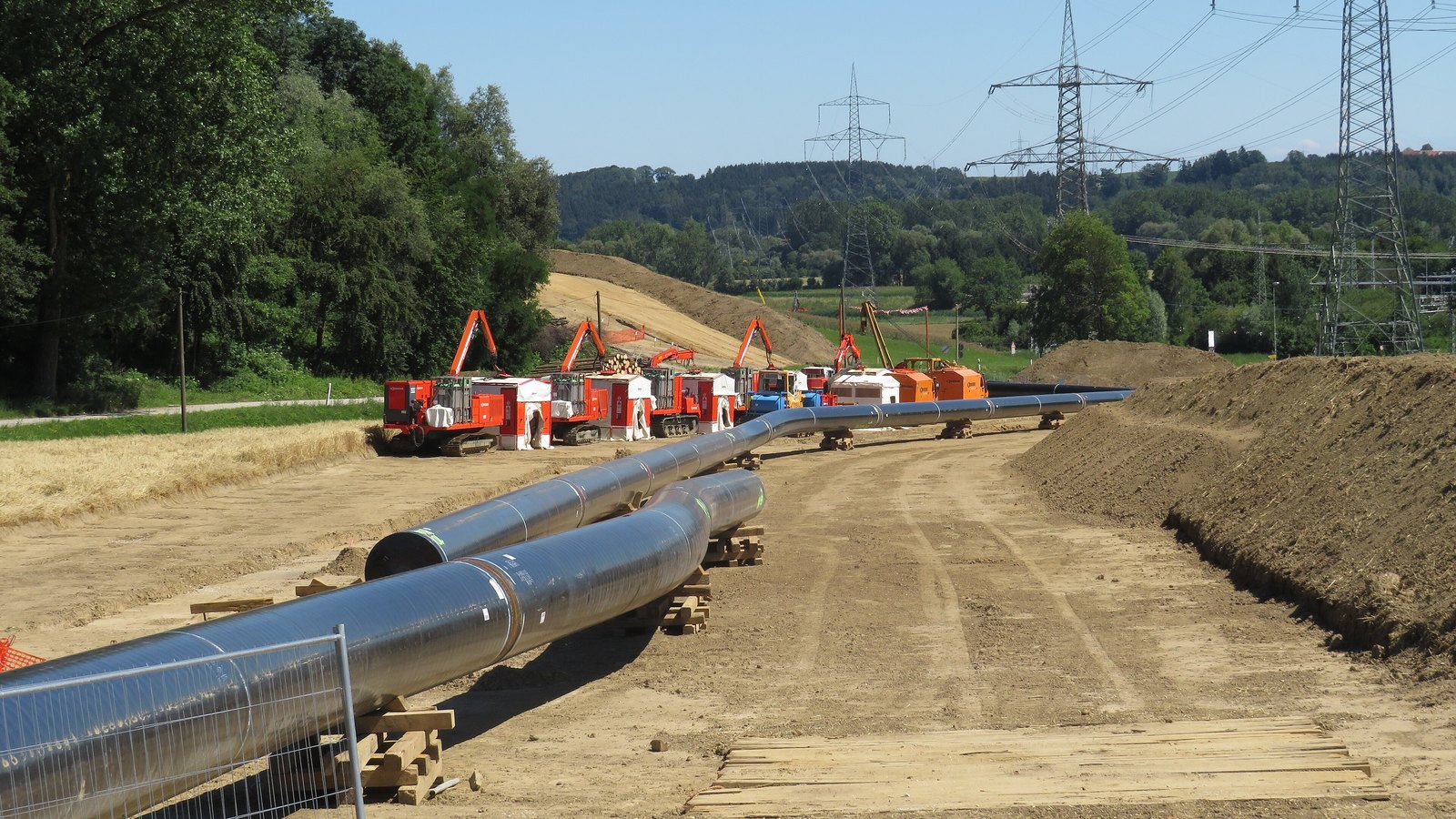
The sunset review determinations encompass specific circular welded line pipe configurations utilized extensively in fluid transmission, high-pressure utility tie-ins, carbon capture pilot systems, and experimental thermal fluid networks. The scope covers carbon and alloy steel welded pipe meeting American Petroleum Institute (API) 5L specifications, typically employed across cross-country pipeline infrastructure and specialized campus utility central plants.
Under the expedited review schedule authorized on August 4, 2026, the Commission evaluated industry participation and concluded that domestic producer responses were fully adequate to proceed, whereas foreign respondent submissions failed to meet statutory thresholds for full individual hearings. The resulting trade remedies sustain both countervailing duties against subsidized Turkish manufacturing and antidumping duties covering exporters across South Korea and Turkey.
| Investigation Number | Country of Origin | Trade Remedy Type | Statutory Basis | Expedited Determination Date | Relief Extension Period |
|---|---|---|---|---|---|
| 701-TA-525 (Second Review) | Turkey | Countervailing Duty (CVD) | Section 751(c) Tariff Act of 1930 | November 12, 2026 | Five Years (through 2031) |
| 731-TA-1260 (Second Review) | South Korea | Antidumping Duty (AD) | 19 U.S.C. 1675(c) | November 12, 2026 | Five Years (through 2031) |
| 731-TA-1261 (Second Review) | Turkey | Antidumping Duty (AD) | 19 U.S.C. 1675(c) | November 12, 2026 | Five Years (through 2031) |
Earlier administrative determinations by the International Trade Administration established that dumping margins would reach up to 6.22 percent for South Korean mills and up to 22.95 percent for Turkish suppliers if protective duties were eliminated. Countervailing subsidy rates on Turkish line pipe likewise indicated enduring government assistance programs that distort baseline export costs.
n
Background and context
The antidumping and countervailing duty orders governing welded line pipe originated in December 2015 following extensive trade injury petitions brought by domestic pipe manufacturers. Under the Uruguay Round Agreements Act and the Tariff Act of 1930, the United States Department of Commerce and the USITC must review active trade remedy orders every five years to establish whether their revocation would likely result in the recurrence of dumping or subsidies and associated material injury to domestic operations.
The first sunset reviews concluded in 2020 and 2021 with affirmative determinations, sustaining tariffs through 2026. The second review cycle commenced on May 1, 2026, when the USITC published its notice of institution. On September 2, 2026, the Department of Commerce published its final expedited sunset review results in the Federal Register notice on welded line pipe from Korea and Turkey, establishing that dumping would resume in the absence of ongoing trade orders.
This domestic framework operates under multilateral discipline outlined in the World Trade Organization anti-dumping agreement, which establishes sunset review guidelines under Article 11.3. Concurrently, the Department of Commerce maintains the statutory framework for antidumping and countervailing duty remedies to protect industrial manufacturing bases from persistent structural distortions in international commodity trade.
n
Reaction and stakeholder perspectives
Domestic steel and pipe manufacturers, represented through industry groups such as the American Line Pipe Producers Association and the Committee on Pipe and Tube Imports, welcomed the unanimous Commission findings. Domestic producers emphasize that persistent global overcapacity in tubular steel products creates chronic downward pricing pressure that jeopardizes ongoing capital investment in modern, high-specification domestic rolling mills.
Trade counsel representing domestic manufacturers highlighted that foreign production facilities have continued to maintain significant idle capacity, allowing rapid export diversion into the open North American market whenever trade barriers are relaxed. Conversely, international trade associations and overseas industrial exporters noted that sustained antidumping duties limit procurement options and increase baseline material expenses for industrial construction and energy transmission projects across the United States.
Economic analysts focused on industrial manufacturing observe that maintaining these orders ensures a predictable domestic supply chain for critical energy infrastructure, but simultaneously requires infrastructure planners and institutional procurement managers to navigate higher baseline steel acquisition costs.
n
What it means for researchers, universities and research offices
For academic research institutions, university engineering faculties, and campus physical plant departments, the continuation of trade duties on welded line pipe carries immediate operational and budgetary implications. Research universities frequently construct specialized testbeds, geothermal energy exchange networks, high-pressure fluid flow loops, and hydrogen transport experimental facilities that specify rigid API 5L steel piping. Project managers cannot anticipate tariff relief or lower import pricing from South Korean or Turkish vendors when structuring multi-year engineering budgets.
Institutional procurement officers must align equipment solicitations with federal grant requirements, particularly where federal funding triggers strict domestic sourcing mandates. When managing major construction or research infrastructure grants, compliance teams must verify certifications under SF-424D construction assurances to ensure that procurement processes account for domestic availability and trade remedy implications. Specialized pilot installations tracking energy infrastructure or carbon sequestration can cross-reference regional resource planning through the EIA Energy Atlas to assess transmission pipeline alignments and distribution requirements.
Furthermore, research administrative offices overseeing subcontracts for facility fabrication must enforce thorough compliance tracking. In accordance with federal transparency rules, subrecipient and vendor transactions exceeding statutory thresholds require meticulous monitoring under FSRS reporting requirements. Engineering research laboratories engaged in advanced metallurgy, stress corrosion evaluation, and pipeline integrity analysis should also reference SAMPE materials engineering standards when qualifying alternative alloy compositions or composite pipe reinforcement sleeves for laboratory test loops.
Institutional researchers collaborating with the Department of Energy fossil energy and carbon management programs should review project budgets for high-pressure fluid transport hardware, ensuring that material escalation clauses reflect domestic market pricing rather than global baseline index rates.
n
What happens next
Following the public inspection release, Federal Register Document 2026-24047 is scheduled for formal publication on November 27, 2026. The Department of Commerce will subsequently publish an official continuation notice in the Federal Register, formally continuing the countervailing duty order on welded line pipe from Turkey and the antidumping duty orders on welded line pipe from South Korea and Turkey for an additional five-year period.
The USITC will issue its comprehensive public report, USITC Publication 5816, by December 21, 2026. This publication will contain the complete factual record, commissioners’ explanatory statements, domestic industry capacity statistics, and detailed import volume metrics compiled throughout the second review. Federal procurement agencies, research contracting offices, and commercial project developers should adjust five-year capital forecasts to reflect active duty enforcement extending through late 2031.
n
Sources
- Federal Register :: Public Inspection: Investigations; Determinations, Modifications, and Rulings, etc.: Welded Line Pipe from South Korea and Turkey, checked 2026-11-25
- Federal Register :: Welded Line Pipe From the Republic of Korea and the Republic of Türkiye: Final Results of the Expedited Second Sunset Review of the Antidumping Duty Orders, checked 2026-11-25
- International Trade Administration: Legal Framework for Antidumping and Countervailing Duty Remedies, checked 2026-11-25
- World Trade Organization: WTO | Anti-dumping – Gateway, checked 2026-11-25
- Department of Energy: Hydrocarbons and Geothermal Energy Office | Department of Energy, checked 2026-11-25






