
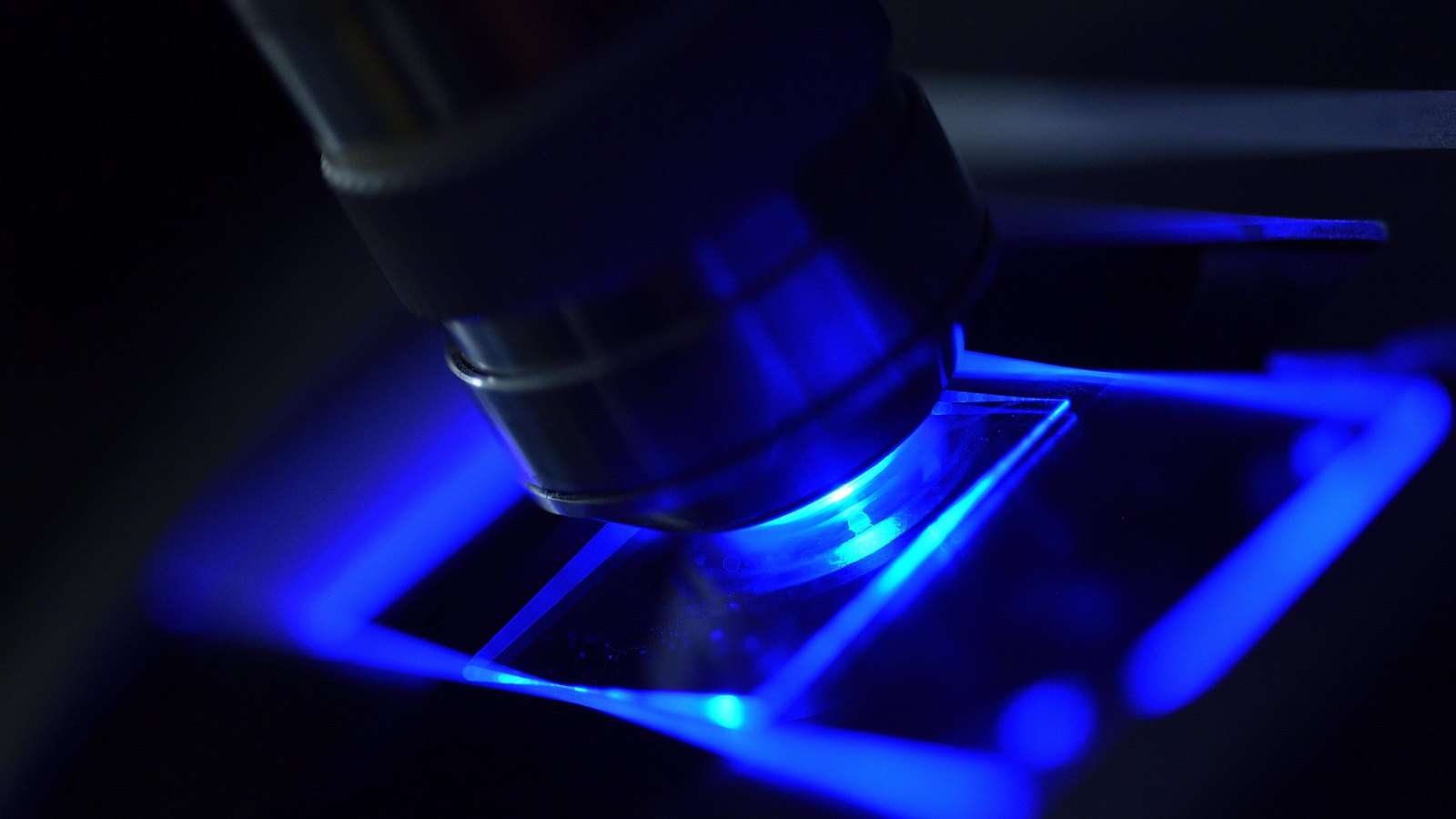
Researchers at the University of Strathclyde and Durham University have proposed an optical biosecurity assay to detect hypothetical synthetic mirror-image organisms using circularly polarized luminescence. Published in Royal Society Open Science, the technique provides university research offices and regulators with a proactive biosurveillance mechanism to identify inverted molecular structures before dual-use capabilities reach self-replicating systems.
Optical Assay Targets Synthetic Mirror-Image Biology
In a study published in Royal Society Open Science, a research team led by Dr. Lewis E. MacKenzie at the University of Strathclyde and Professor Robert E. Pal at Durham University detailed a detection framework for hypothetical mirror organisms. Terrestrial life is strictly homochiral: natural proteins are built exclusively from left-handed (L) amino acids, while DNA and RNA employ right-handed (D) sugars. A synthetic mirror organism would invert this fundamental architecture using D-amino acids and L-nucleic acids. Although complete self-replicating mirror bacteria do not exist today, foundational components—including chirally inverted polymerases and transcription systems—have already been demonstrated in laboratory settings.
The researchers developed their detection methodology as a contingency safeguard. Standard biological surveillance techniques rely on molecular recognition calibrated solely for conventional chirality and fail to identify inverted forms. By measuring circularly polarized luminescence (CPL), the team established an optical method capable of verifying the chirality of cellular targets, providing biosafety committees and biosecurity authorities with an early detection tool.
Detection Mechanism and Probe Architecture
Circularly polarized luminescence measures the differential emission intensity of left- and right-handed circularly polarized light from photoexcited molecules. The underlying physical principle is identical to the optical polarization filters used in 3D cinema glasses to distinguish left- and right-eye stereoscopic images. When applied to biology, chiral molecules emit light with a characteristic polarization twist, yielding a quantifiable optical signature that reflects their stereochemical configuration.
The proposed assay uses a multi-probe panel targeting several subcellular structures simultaneously, such as cell membranes and nucleic acids. The assay pairs intrinsically chiral luminescent complexes with achiral fluorophores that generate induced CPL upon binding to chiral biopolymers through supramolecular interactions. Evaluating multiple cellular targets guards against false positives caused by sample turbidity or background fluorescence.
Significantly for biosafety compliance, the entire assay can be developed and calibrated using standard terrestrial cells without creating or culturing mirror organisms. Prototype CPL detection systems developed by Professor Pal have already operated across laboratory microscopes, enantioselective differential chiral contrast (EDCC) cameras, and multi-well plate readers, enabling both high-throughput screening and targeted bench examination.
Biosurveillance Capabilities Across Biological Domains
The table below compares structural properties, biological behaviors, and biosurveillance capabilities between conventional terrestrial life and hypothetical synthetic mirror life.
| Biological Dimension | Terrestrial Biology | Synthetic Mirror Biology | Biosurveillance Detection Approach |
|---|---|---|---|
| Amino Acid Chirality | Left-handed (L-enantiomers) | Right-handed (D-enantiomers) | CPL chiroptical probe binding and differential circular emission spectroscopy |
| Nucleic Acid Backbone | Right-handed (D-sugars, right-handed helix) | Left-handed (L-sugars, left-handed helix) | Induced supramolecular CPL fluorophore binding assays |
| Immune System Recognition | Recognized by pattern receptors, antibodies, and T-cells | Evasive; host proteases fail to digest mirror antigens | Optical chirality screening bypassing enzymatic antibody-antigen assays |
| Conventional Biosurveillance | Standard qPCR primers, ELISA, and NGS sequencing kits | Undetectable; natural enzymes cannot copy L-DNA templates | Enantioselective differential chiral contrast (EDCC) optical plate readers |
| Regulatory Oversight Tier | Established biosafety levels (BSL-1 to BSL-4) | High-consequence dual-use research boundary | Institutional biosafety screening and precursor procurement audits |
Biological Asymmetry and the Biosurveillance Gap
Mirror-image biochemistry has gained momentum because mirror molecules offer substantial clinical utility. Because human metabolic enzymes cannot digest D-peptides or L-nucleic acids, mirror molecules resist enzymatic degradation in vivo. Pharmaceutical teams utilize D-peptides as long-acting therapeutics, while mirror aptamers serve as stable diagnostic tools. These applications involve non-replicating molecules where biosafety risks remain low.
In contrast, self-replicating mirror organisms pose severe ecological and health hazards. In natural ecosystems, a replicating mirror bacterium would face no natural predators, as bacteriophages and protozoa cannot metabolize inverted biopolymers. Furthermore, mammalian adaptive immunity relies on proteases to cleave microbial antigens for presentation to T-cells; mirror bacteria could bypass these defenses and cause untreatable systemic infections.
A formal assessment by the UK Government Office for Science highlighted that current biosurveillance methods cannot detect mirror life because standard diagnostic assays rely on enantiomer-specific biochemical reagents. Standard polymerase chain reaction (PCR) and sequencing protocols depend on natural enzymes that fail on mirror templates. The CPL optical technique bridges this gap by directly sensing physical chirality rather than relying on enzymatic reactions.
Scientific and Multilateral Policy Responses
The study arrives amid growing multilateral scrutiny of synthetic biology risks. In an official Science Brief, the United Nations Secretary-General’s Scientific Advisory Board established a clear boundary between non-replicating mirror molecules and self-replicating mirror organisms. The UN board warned that replicating mirror bacteria could pose catastrophic threats to ecosystems and recommended international oversight guardrails before synthesis capabilities mature further.
The study authors highlighted the necessity of preemptive technological measures. “We don’t expect mirror life to appear tomorrow, but if it did arise, the consequences could be severe, and it makes sense to develop detection methods before they are needed,” said Dr. Lewis MacKenzie. “Professor Pal and I had been working on CPL technologies before recent concerns became prominent, and guarding against mirror life was a clear fit for our research.”
Professor Robert Pal emphasized the accessibility of optical instrumentation: “CPL detection relies on the same fundamental concept that allows modern 3D cinema glasses to create a stereoscopic image. This CPL detection approach can be adapted to many types of systems for analysis of cells, including biological plate readers, microscopes, and cameras. This means our mirror life assay approach could be generalised to many environments depending on end user needs.”
Implications for University Biosafety and Research Compliance
For academic research institutions, the proposal has practical governance implications. University Institutional Biosafety Committees (IBCs) and compliance officers managing dual-use research of concern (DURC) must distinguish between non-replicating mirror molecular tools and high-risk attempts to engineer replicating systems. Standard biosafety and biosecurity protocols, from BSL-1 to BSL-4, are calibrated around natural biology and require reassessment when applied to mirror-image materials.
Research compliance offices handling external collaborations must ensure that materials governed by a material transfer agreement (MTA) explicitly record molecular chirality. Commercial gene synthesis providers are also evaluating biosecurity screening protocols. Because current customer screening focuses on sequence-based alignment against regulated pathogen databases, chiral inversions could bypass standard automated flags unless physical chiroptical verification is integrated into synthesis workflows.
Next Steps for Standardization and Oversight
Operationalizing the CPL detection assay requires empirical validation across diverse non-pathogenic terrestrial cell lines. Researchers plan to benchmark multi-probe panel performance on commercial plate readers to establish reference baseline spectra and quantify optical thresholds for chiral discrimination.
Internationally, technical advisory bodies under the Biological Weapons Convention (BWC) and United Nations frameworks continue evaluating oversight standards for synthetic biology. Pre-deploying validated optical biosurveillance methods allows the scientific community to preserve biomedical research into mirror therapeutics while maintaining verifiable biosecurity safeguards against unregulated synthetic organisms.
Sources
- Royal Society Open Science: Circularly polarized luminescence as a contingency assay for mirror life bio-hazards, checked 2026-11-20
- University of Strathclyde: Researchers propose first method to detect mirror life, checked 2026-11-20
- Durham University: Researchers propose first method to detect mirror life, checked 2026-11-20
- ScienceDaily: Scientists propose a way to detect dangerous mirror life before it exists, checked 2026-11-20
- Glasgow City of Science and Innovation: Strathclyde Researchers Propose First Method To Detect Hypothetical Mirror Life, checked 2026-11-20
- United Nations: Mirror Life – Secretary-General Scientific Advisory Board, checked 2026-11-20
- UK Government Office for Science: Mirror life publication and policy assessment, checked 2026-11-20


