
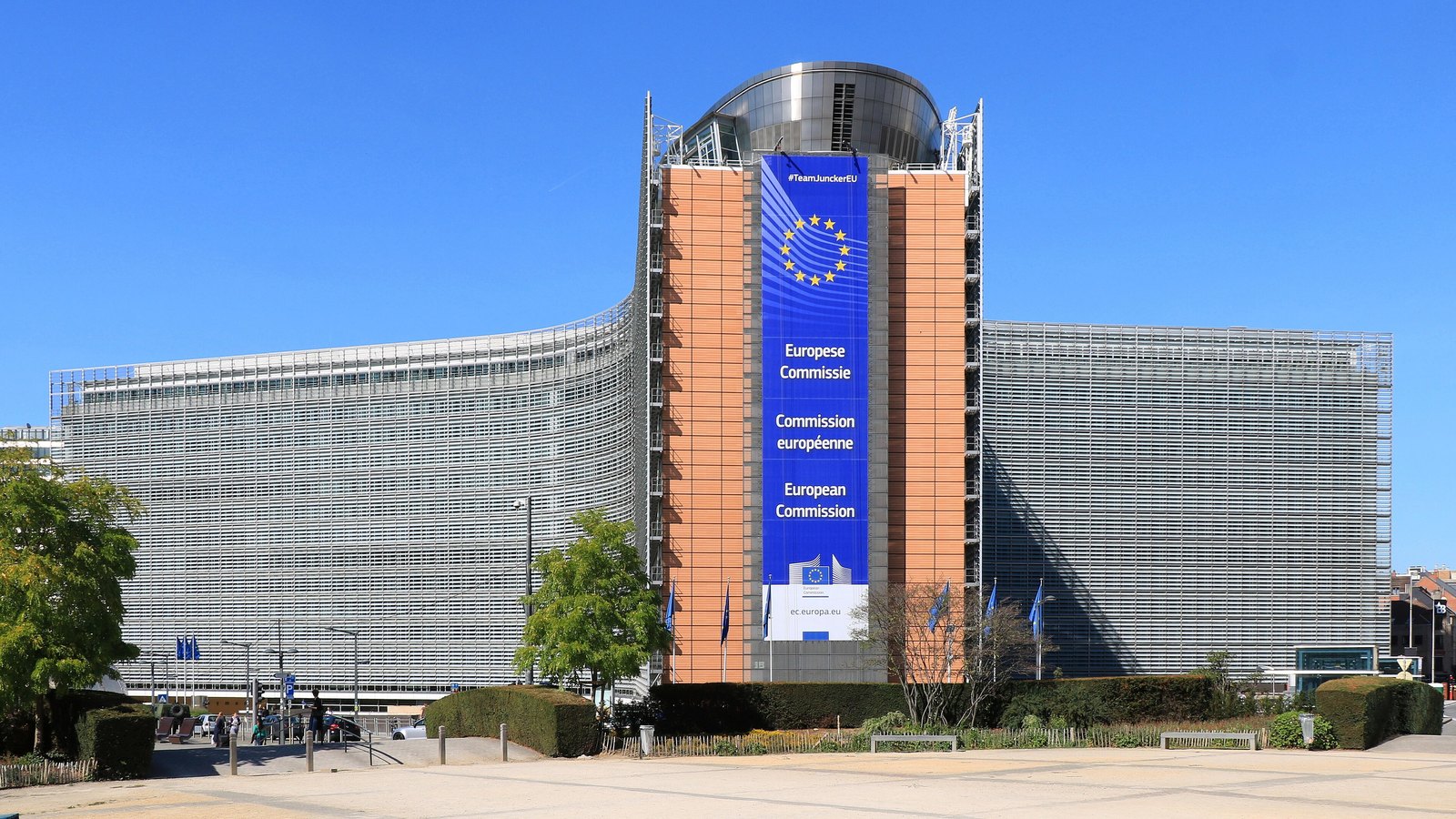
The European Commission plans to launch five Innovation Fund calls for proposals on 3 December 2026, with a combined budget of up to €5.2 billion, and has opened registration for four online info days between 9 and 15 December. The package, announced by the EU’s CINEA executive agency on 17 November 2026, includes new dedicated calls for small and medium-sized enterprises and for maritime projects, plus two auctions for hydrogen and industrial heat.
What happened
On 17 November 2026, CINEA published a notice that registrations were open for the Innovation Fund 2026 (IF26) info days. According to the notice, the Commission plans to launch five calls (three grant calls and two auctions) on 3 December 2026. DG CLIMA and CINEA are hosting the info days, which are livestreamed with live questions taken through Slido and cover call objectives, eligibility, funding conditions, evaluation and application documents.
The Innovation Fund is financed from EU Emissions Trading System revenues. CINEA says it has committed more than €18 billion to around 380 projects, including projects still in grant agreement preparation. The Commission’s calls page adds that when calls open, Member States can add national budgets to fund extra projects in their territory under a simplified State aid assessment, for both grants and auctions.
Key details: the five calls
| Call | Type | Budget | Info day (CET) |
|---|---|---|---|
| Net-zero technologies (NZT) | Grant | €3.3 billion | 15 December, 09:00–13:00 (joint with maritime) |
| SME call (new) | Grant | €200 million | 10 December, 09:30–13:00 |
| Maritime call (new) | Grant | €200 million | 15 December, 09:00–13:00 (joint with NZT) |
| Renewable and electrolytic low-carbon hydrogen auction | Auction | €500 million | 9 December, 09:30–13:00 |
| Industrial heat auction | Auction | €1 billion | 9 December, 14:30–17:30 |
The Commission’s call pages describe how the calls are structured. The NZT call has four topics defined by capital expenditure (CAPEX): large-scale general decarbonisation above €100 million; small and medium-scale general decarbonisation between €2.5 million and €100 million; clean-tech manufacturing and critical raw materials above €2.5 million; and pilots above €2.5 million focused on deep decarbonisation. Projects eligible for the new maritime call cannot apply under the NZT call unless they are pilots. The NZT call is planned to open in December 2026 and close in April 2027.
The maritime call is open to projects with CAPEX of at least €2.5 million. Its themes are advanced energy efficiency, sustainable alternative fuels, electrification, zero-emission propulsion including wind-assisted technologies, and innovative port infrastructure. Its award criteria are degree of innovation, greenhouse gas emission avoidance, project maturity, replicability and cost efficiency; it is also planned to close in April 2027.
The SME call is for small-scale projects by SMEs with CAPEX between €2.5 million and €20 million, using the SME definition in EU Recommendation 2003/361. The Commission’s page states that all consortium members must be SMEs. It has two indicative cut-offs: end of March 2027 and end of September 2027. Orientation dialogues of 25 minutes, in English only, are planned from 7 December 2026 to 11 February 2027, and an applicant can take part in only one orientation dialogue, either the SME one or a national one.
The heat auction info day covers electrified technologies such as heat pumps, thermal storage, electric boilers and plasma torches, direct renewable heat such as solar thermal and geothermal, and waste heat from nuclear technologies such as small modular reactors and from data centres.
Background and context
The 2026 round follows the 2025 round, which the Commission opened in early December 2025 with three calls worth €5.2 billion: a third European Hydrogen Bank auction (€1.3 billion), a first industrial process heat auction (up to €1 billion) and a €2.9 billion net-zero technologies call, according to pv magazine‘s report of 4 December 2025. The 2026 package keeps the same total but changes the mix: the NZT call is larger at €3.3 billion, the hydrogen auction is smaller at €500 million, and the SME and maritime calls are new.
Consultancy Zabala Innovation reported on 2 October 2026 that maritime and small-scale SME projects move out of the NZT call into dedicated calls, that the SME call is expected to have a simpler application with fewer annexes, a simplified emissions calculation and more pass/fail evaluation criteria, and that the heat auction scope widens to include nuclear heat and data-centre waste heat. Hezelburcht, another consultancy, reported on 24 September 2026 that the SME call has lighter reporting and monitoring and two cut-off dates, and that the maritime sector entered the Fund’s scope after the EU ETS revision.
What it means for researchers, universities and research offices
The Innovation Fund pays for first-of-a-kind commercial-scale and pilot deployment rather than basic research, so the calls matter to research organisations mainly as technology developers, partners and hosts of pilots. Several points follow from the official material.
- Pilots. The NZT call keeps a dedicated pilots topic for deep decarbonisation projects with CAPEX above €2.5 million, and pilots are the one category that stays eligible under NZT even where a project could also fit the maritime call. University and institute groups with a technology at demonstration stage should check their technology readiness level against that topic.
- SME consortia. Because the SME call requires every consortium member to be an SME, a university or research organisation cannot be a consortium member in that call. Research offices supporting spin-outs and start-ups with projects of €2.5 million to €20 million CAPEX can still help them prepare; the SME-only rule applies to the applicant consortium.
- Consortium paperwork. Where research partners join NZT or maritime consortia, the Commission’s pages do not set out partner rules. Binding eligibility and application requirements will be in the call documentation on the EU Funding and Tenders Portal, so offices should read those before committing a researcher. A consortium agreement and the terms of the grant agreement need review for intellectual property and cost reporting.
- Timelines. The grant calls are planned to close in April 2027 (NZT and maritime) and at the end of March and September 2027 (SME), so partner-finding and CAPEX budgeting need to start during the December info days. For comparison with research-funding call planning, see the guides on how to write a grant proposal and Horizon Europe lump-sum funding.
- National top-ups. Member States can add national budgets for extra projects in their territory, so a research office should check whether its national authority intends to do so.
What happens next
The Commission plans to open all five calls on 3 December 2026. The info days follow: hydrogen and heat auctions on 9 December, the SME call on 10 December, and the joint maritime and NZT session on 15 December. Registration is through the EU Survey links on the CINEA notice. Call documentation will appear on the EU Funding and Tenders Portal, and the NZT and maritime calls are planned to close in April 2027.
Sources
- CINEA, Registrations open for the Innovation Fund 2026 Info Days, 17 November 2026.
- European Commission (DG CLIMA), IF26 SME call, IF26 NZT call and IF26 maritime call.
- Zabala Innovation, Innovation Fund 2026-2027, 2 October 2026.
- Hezelburcht, Changes to the Innovation Fund: new grant opportunities for SMEs and the maritime sector, 24 September 2026.
- pv magazine, European Commission opens third hydrogen auction, 4 December 2025.


