
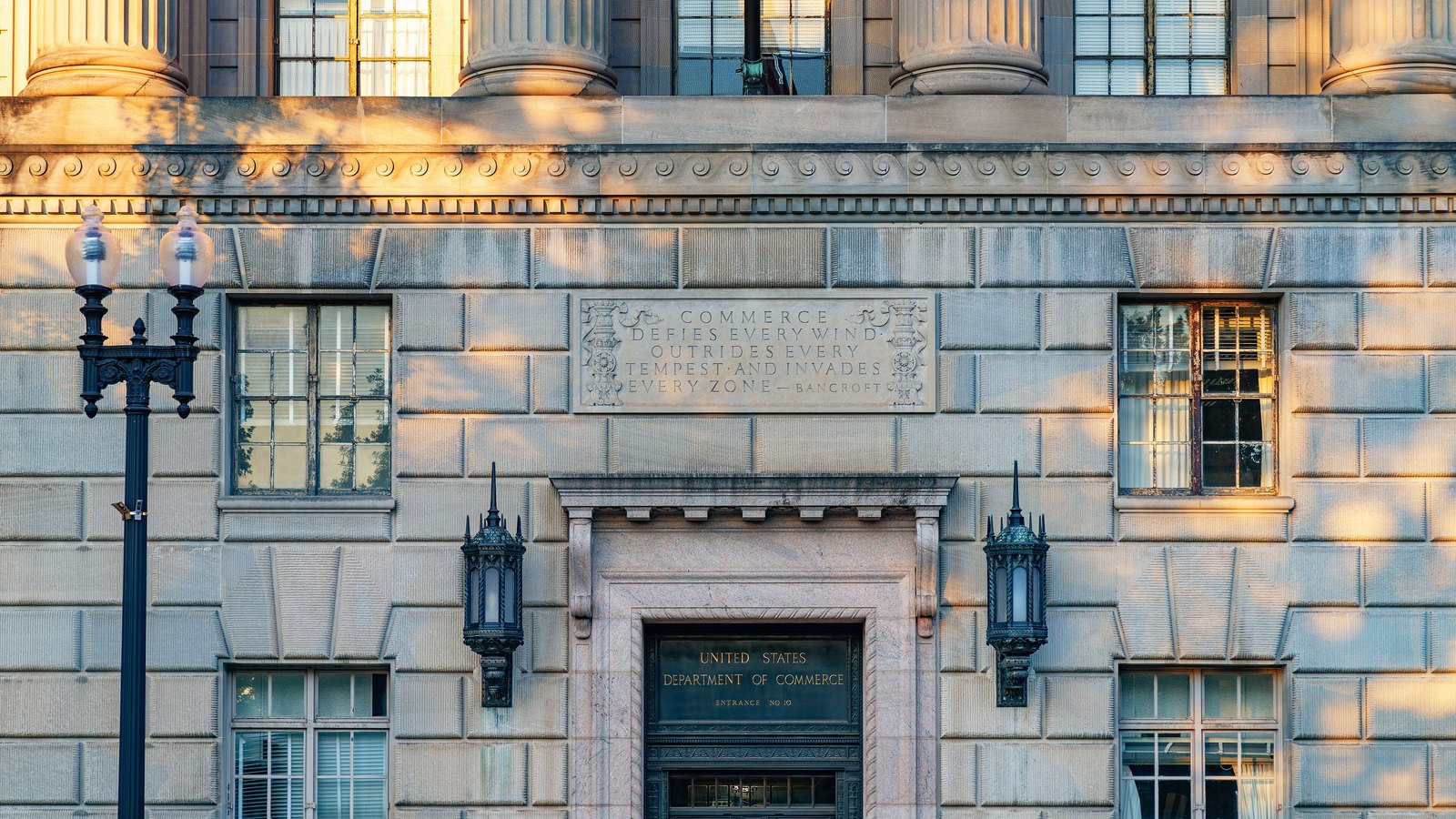
In a major regulatory escalation following earlier CASRAI reporting on Nscale’s amended IPO financing disclosures and the US export controls spanning five intermediary nations, London-based cloud provider Nscale faces intense scrutiny from the US Bureau of Industry and Security over its remote-compute contract supplying 2,304 Nvidia B200 GPUs in Norway to ByteDance subsidiary Spring (SG) Pte. Ltd., establishing critical licensing precedents for international university supercomputing partnerships.
US Export Scrutiny Focuses on Nscale’s Offshore AI GPU Leases
The United States Department of Commerce and its Bureau of Industry and Security (BIS) have placed London-headquartered AI cloud infrastructure provider Nscale under direct regulatory examination over its high-performance compute agreements with Chinese technology conglomerate ByteDance. According to reporting from Tom’s Hardware and disclosures first revealed in regulatory filings, Nscale leased remote access to a cluster of 2,304 cutting-edge Nvidia B200 Blackwell graphics processing units housed in Glomfjord, Norway, to Spring (SG) Pte. Ltd., a wholly owned Singaporean subsidiary of ByteDance.
The transaction represents an acute commercial and geopolitical flashpoint because it leveraged an offshore hosting model to supply state-of-the-art computational capacity to an entity controlled from mainland China. In 2025, the single contract with Spring generated approximately $24 million, accounting for roughly 73 percent of Nscale’s entire $33 million annual revenue, as documented by The Next Web. The sudden regulatory exposure arrives at a pivotal juncture for Nscale as the firm pursues an initial public offering on the New York Stock Exchange under ticker NSCL, having earlier registered under Central Index Key 0002110365 in an SEC Form S-1/A filing.
Financial Exposure, Infrastructure Specs, and Licensing Timelines
The contractual framework between Nscale and ByteDance underscores the extraordinary concentration risk common among emergent AI neocloud operators, while exposing the regulatory vulnerabilities created by extraterritorial export controls. Loan agreements linked to credit facilities from Macquarie Bank revealed that cash flows from Spring directly collateralized project debt used to purchase high-density server infrastructure. Under the updated regulatory baseline, Nscale must either secure an affirmative export license from BIS within a strict 90-day transition window or terminate service to avoid severe civil and criminal enforcement under US trade statutes.
| Parameter | Contract Specification | Regulatory and Commercial Context |
|---|---|---|
| Primary Customer | Spring (SG) Pte. Ltd. | Wholly owned Singaporean operating subsidiary of ByteDance |
| Hardware Deployed | 2,304 Nvidia B200 GPUs | Blackwell architecture supercomputing hardware subject to ECCN 3A090 controls |
| Data Center Location | Glomfjord, Norway | Arctic Circle facility powered by regional hydroelectric generation |
| 2025 Revenue Contribution | $24.0 million (73% of total) | Core revenue driver against $33.0 million total annual corporate turnover |
| Debt Facility Linkage | $105 million Macquarie Bank loan | Credit covenants require strict adherence to international export laws |
| BIS Compliance Window | 90-day transition period | Mandatory window to submit and obtain US export license for continued operations |
| Regulatory Instrument | 91 FR 74970 (§ 744.24 EAR) | Interim final rule governing remote access to advanced computing items |
Closing the Remote-Access Loophole in Advanced Semiconductor Controls
The scrutiny directed at Nscale stems directly from the landmark interim final rule published in the Federal Register (91 FR 74970) titled “Addressing Remote Access to Advanced Semiconductors.” Published by the Bureau of Industry and Security under RIN 0694-AK50 and Docket BIS-2026-0628, the rule amends the Export Administration Regulations (EAR) by adding Section 744.24. This provision imposes worldwide end-use controls on data centers providing compute capacity to entities headquartered in Country Group D:5 jurisdictions, including China and Macau.
Historically, US export controls restricted the physical shipment of advanced microelectronics, such as integrated circuits classified under Export Control Classification Numbers (ECCN) 3A090 and 4A090, to restricted territories. However, foreign infrastructure providers could legally acquire US chips in friendly nations like Norway or Iceland and rent remote access via Infrastructure-as-a-Service (IaaS) channels to overseas subsidiaries of Chinese enterprises. Legal analyses from Gibson Dunn and Pillsbury Winthrop Shaw Pittman observe that Section 744.24 specifically closes this cloud loophole by establishing a license requirement whenever an operator provides more than 12 million aggregate Total Processing Performance (TPP) to restricted parties.
Industry and Market Reaction Ahead of Planned New York IPO
Financial markets and semiconductor industry analysts have responded with acute caution to the convergence of customer concentration and regulatory enforcement. Nscale had targeted a New York public listing with an initial valuation target approaching $30 billion, though institutional investors had revised expectations toward the $16 billion to $19 billion band following disclosures regarding high operating expenditure commitments. The revelation that nearly three-quarters of historic revenue rests upon a contract now subject to US discretionary licensing has introduced substantial friction into investor book-building.
Nscale has expanded its commercial portfolio by signing high-profile infrastructure agreements with enterprise AI leaders including Microsoft and Anthropic, aiming to dilute its revenue dependence on Chinese-affiliated entities. Nevertheless, capital expenditure obligations for Blackwell and Hopper hardware require sustained, predictable cash flow to service debt facilities. Analysts note that if BIS denies an export license or imposes onerous end-use monitoring requirements, neocloud infrastructure providers will face immediate revenue shortfalls and potential contract renegotiation penalties.
Implications for Cross-Border Academic Compute and Research Security
The enforcement actions against commercial cloud leasing carry far-reaching consequences for international research institutions, universities, and high-performance computing consortia. Modern computational science increasingly relies on distributed, multi-tenant cloud environments to execute large-scale foundation model pre-training, structural biology simulations, and quantum chemistry computations. Under the expanding framework of export controls applied to AI models and systems, university research teams collaborating across borders must recognize that remote access to advanced compute clusters is now legally equivalent to physical hardware export under US jurisdiction.
For academic research administration, this regulatory shift elevates institutional research security governance from traditional campus laboratory oversight into routine cloud procurement. Research offices must implement robust screening protocols to verify the ultimate parentage and physical location of academic collaborators utilizing institutional compute allocations. Specifically, university high-performance computing centers that host advanced Nvidia clusters or receive federal research grants must ensure that shared cloud partitions do not inadvertently provide compute access exceeding 12 million TPP to researchers affiliated with institutions in Country Group D:5 countries without a validated BIS authorization.
Failure to institute adequate tenant verification can expose university compute facilities to severe administrative sanctions, federal grant debarment, and loss of eligibility for US-origin advanced computing hardware. Compliance officers must coordinate closely with academic department chairs and principal investigators to audit third-party cloud compute contracts, update sponsored research data-sharing agreements, and ensure that cross-border AI research consortia operate within established licensing boundaries.
Regulatory Milestones, 90-Day Grace Period, and Next Steps
Under the procedural provisions of 91 FR 74970, Nscale and other foreign cloud operators have entered a 90-day transition window extending into mid-February 2027 to submit formal license applications to the Bureau of Industry and Security. During this grace period, existing compute allocations may continue operating while regulatory authorities review end-user statements, technical isolation protocols, and workload auditing capabilities. Concurrently, BIS has established a 60-day public comment period running through January 19, 2027, inviting industry stakeholders and academic organizations to submit formal feedback on the technical thresholds and operational burdens of Section 744.24.
Moving forward, the outcome of Nscale’s license petition will establish the benchmark for how the US government polices international cloud compute hubs in Europe and Southeast Asia. Institutional research administrators and commercial cloud providers will monitor whether BIS adopts a policy of presumptive denial for Chinese-affiliated entities utilizing Western infrastructure, or whether verifiable cryptographic isolation and strict application-level screening can enable continued multi-tenant operations.
Sources
- Federal Register: Addressing Remote Access to Advanced Semiconductors (91 FR 74970), checked 2026-11-20
- Securities and Exchange Commission: Nscale plc Amendment No. 1 to Form S-1 Registration Statement, checked 2026-11-20
- Tom’s Hardware: China’s ByteDance gained access to over 2,000 Nvidia B200 chips through Norway data center, checked 2026-11-20
- The Next Web: ByteDance brought in nearly 75% of Nscale’s 2025 sales, the FT reports, checked 2026-11-20
- Gibson Dunn: BIS Expands Advanced Computing Controls to Address Data Center Remote Access and Third Country Diversion, checked 2026-11-20
- Pillsbury Winthrop Shaw Pittman: Commerce Issues Interim Final Rule Restricting Remote Access to Advanced Chips, checked 2026-11-20


