
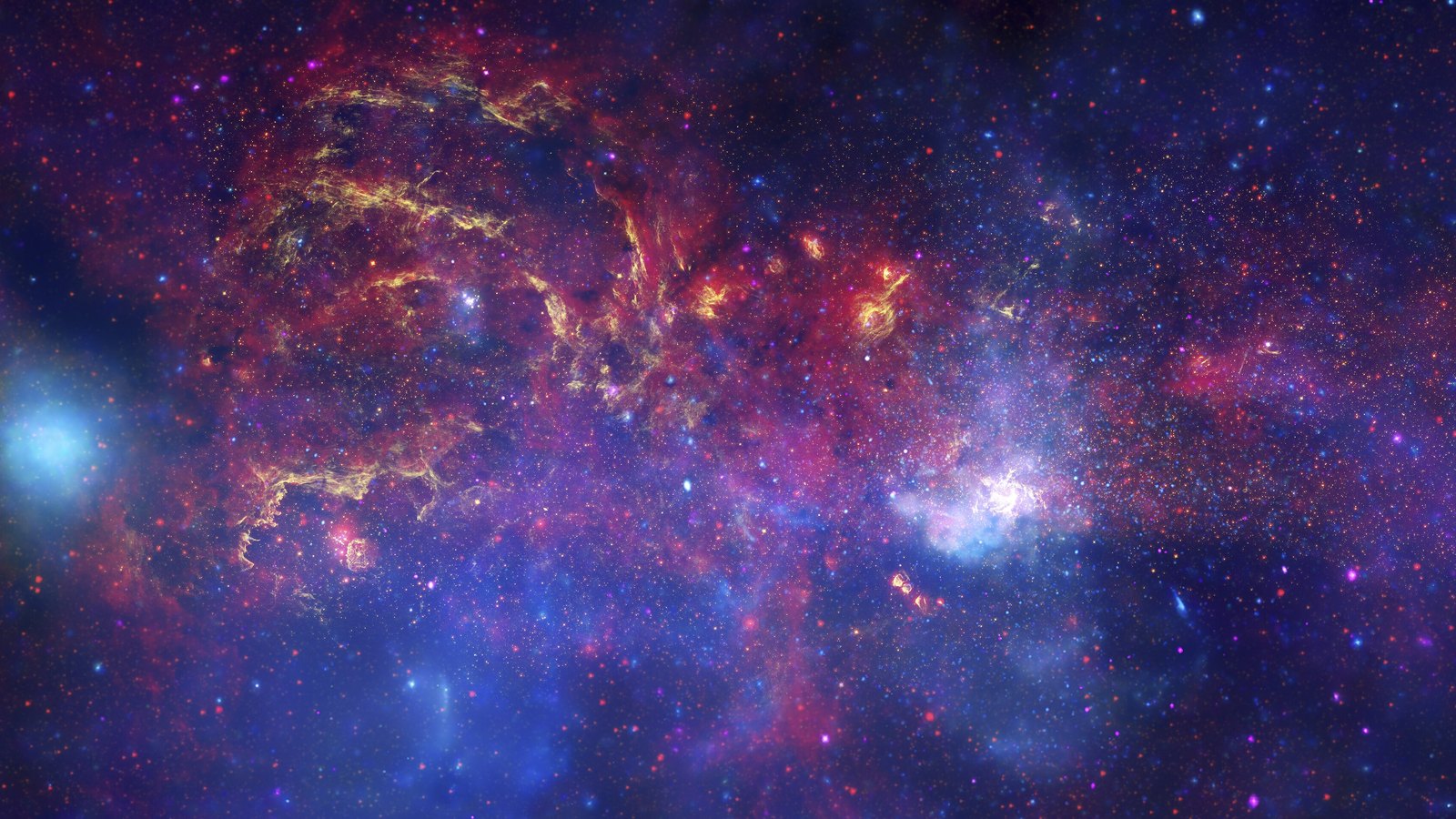
In research published in Nature Astronomy on November 23, 2026, astrophysicists led by the University of Sydney announced that shock waves driven by the Milky Way central rotating bar actively trigger massive star formation, demonstrating that regions long mapped as the Norma spiral arm trace a galactic shock front. The structural reclassification reshapes models of galactic evolution and establishes new benchmarks for data stewardship across large-scale computational astrophysics programs.
What happened
On November 23, 2026, researchers from the University of Sydney School of Physics and the Sydney Institute for Astronomy published findings combining observational radio astronomy with numerical hydrodynamics. The paper, titled The nature of the Norma arm as a bar-driven star-forming shock front, appeared in Nature Astronomy, revising the structural map of the inner Milky Way.
Lead author Dr. Hillary Davis and collaborators established that stellar nurseries previously attributed to the Norma spiral arm do not form an independent logarithmic spiral arm. Instead, these regions lie along the dense shock front generated at the leading edge of the Milky Way central rotating stellar bar. Because Earth sits within the galactic disk, dust obscures optical views of the galactic centre, requiring astronomers to analyze galactic architecture through radio-frequency tracers and kinematic simulations.
The team mapped cosmic microwave masers—narrow-line microwave emissions generated by water and methanol molecules in dense gas around infant high-mass stars. Cross-matching these maser positions and velocities against hydrodynamic N-body simulations spanning billions of years revealed that observed star-forming complexes align with the gas shock front driven by the bar.
Key details
The study provides physical constraints on the geometry, pattern speed, and extent of the Milky Way central bar. The bar extends approximately 4.3 kiloparsecs (roughly 14,000 light-years) from the Galactic Center along its semi-major axis, confirming a relatively long, slowly rotating structure.
The primary finding is active starburst activity within the shock zone. In typical barred galaxies, central stellar bars induce strong shear velocities along leading dust lanes that suppress protostellar collapse. In the Milky Way, local gas compression overcomes this shear, driving massive star birth. Independent coverage from Universe Today and ScienceDaily emphasized that this starburst environment fundamentally revises astrophysical assumptions regarding bar-driven turbulence and galactic gas dynamics.
Observational tracking relied on southern radio astronomy surveys and precision astrometry. High-resolution facilities, including the 64-metre dish at the Parkes Observatory operated by the Australia Telescope National Facility, provided foundational catalogs of methanol and water masers. The authors synthesized these observations with computational simulations conducted at National Computing Infrastructure Australia and the LUNARC supercomputing centre at Lund University in Sweden.
The table below compares the structural parameters, observational tracers, and computational assets documented in the study:
| Metric or Parameter | Classical Spiral Model Value | Revised Bar Shock Model Value | Observational or Computational Source |
|---|---|---|---|
| Structural Feature Classification | Inner segment of Norma Spiral Arm | Leading-edge shock front of Galactic Bar | Davis et al. (Nature Astronomy, 2026) |
| Galactic Bar Semi-Major Extent | 3.0 to 3.5 kiloparsecs (fast bar) | 4.3 kiloparsecs (~14,000 light-years) | Hydrodynamic N-body simulation constraints |
| Star Formation in Shock Front | Suppressed by shear turbulence | Active massive star formation observed | Maser kinematics aligned with gas shock |
| Primary Observational Tracers | Optical and infrared stellar counts | Cosmic microwave water and methanol masers | Southern radio surveys and ATNF catalogs |
| High-Performance Computing Facilities | Single-institution compute clusters | NCI Australia (Gadi) and LUNARC Sweden | NCRIS capability and Lund University HPC |
| Participating Funding Bodies | Single-agency domestic awards | ARC, Wallenberg, Swedish Research Council | Multi-national joint research sponsorship |
Background and context
Mapping the Milky Way remains a fundamental challenge in astronomy because Earth resides inside the galactic disk, viewing the interior through thousands of light-years of dust. Historically, astronomers used neutral hydrogen 21-centimeter line emissions and carbon monoxide surveys to trace spiral arms, designating them after constellations such as Scutum-Centaurus, Sagittarius, Perseus, and Norma.
Although satellite surveys confirmed a central bar, reconciling its orientation, rotation, and connection to outer spiral arms generated ongoing debate. In external galaxies such as NGC 1300 and NGC 1097, central bars feature dark dust lanes where infalling gas undergoes strong supersonic shocks. High shear velocities in those systems disrupt molecular clouds, leaving bar shock zones largely devoid of new stars.
The University of Sydney discovery reveals that the Milky Way belongs to a rarer class of barred spirals where shock compression overcomes shear barriers to ignite star formation. Reclassifying the inner Norma arm as a bar shock front resolves longstanding kinematic anomalies and simplifies galactic structure models.
Reaction and stakeholder perspective
Astronomers and computational astrophysicists welcomed the findings for connecting precision radio astrometry with numerical modeling. Lead author Dr. Hillary Davis highlighted the governing physics: “At its heart, star formation is a process we understand from everyday physics. Forces set matter in motion. In this case gas is compressed, and that compression can create the conditions for new stars to be born on a massive scale,” Davis stated in the University of Sydney announcement, noting that active star birth along a bar shock front is extraordinary.
Dr. Thor Tepper-Garcia, co-author and computational astrophysicist at the University of Sydney School of Physics who developed the simulations, noted: “It is particularly rewarding to see computational astrophysics challenge our understanding of the very structure of our Galaxy. This is a wonderful example of the power of bringing numerical modelling and astronomical observations together.” Senior co-author Professor Joss Bland-Hawthorn stated that establishing precise constraints on bar length and rotation provides a firm empirical basis for future galactic surveys.
What it means for researchers, universities and research offices
The study carries concrete operational implications for research offices, high-performance computing managers, and data stewards. First, the project illustrates requirements for computational reproducibility across astrophysics pipelines. Multi-billion-year hydrodynamics simulations generate terabytes of coordinate grids and velocity fields. Research offices must ensure research teams maintain reproducible workflows with versioned simulation codes and accessible parameter sets.
Second, the findings emphasize implementation of FAIR data principles (Findable, Accessible, Interoperable, and Reusable). Enabling researchers worldwide to interrogate simulation outputs and observational catalogs requires depositing data in curated repositories connected to national facilities such as the Australian Research Data Commons (ARDC), ensuring persistent identifiers and standardized metadata for complex spatial datasets.
Third, the investigation demonstrates cross-border compliance workflows for multi-funder collaborations. Sponsored jointly by the Australian Research Council, the Knut and Alice Wallenberg Foundation, the Swedish Research Council, the Swedish National Space Agency, the LMK Foundation, and eSSENCE, the project required coordinating multi-jurisdictional reporting, data sharing agreements, and alignment with institutional open data requirements.
Finally, the work reinforces the need for sustained investment in institutional and national supercomputing infrastructure. By federating compute hours across Australia National Computing Infrastructure and Lund University LUNARC, the researchers achieved unprecedented simulation resolution, highlighting how university access to high-performance computing tiers directly drives competitive scientific breakthroughs.
What happens next
Astrophysicists in Australia, Europe, and North America are preparing targeted follow-up observations and expanded simulation campaigns. Astronomers plan to use the Square Kilometre Array radio telescope, currently under construction in Western Australia and South Africa, to conduct ultra-deep maser astrometry and molecular line surveys along the entire bar boundary.
Simultaneously, the University of Sydney computational astrophysics team is incorporating magnetohydrodynamic turbulence and cosmic ray feedback into next-generation galactic models. These updated simulation archives will be released to the astronomical community to support updated three-dimensional cartographic models of the Milky Way.
Sources
- University of Sydney: Galactic shock: discovery challenges our understanding of the Milky Way, checked 2026-11-26
- Nature Astronomy: The nature of the Norma arm as a bar-driven star-forming shock front, checked 2026-11-26
- Universe Today: A New Discovery is Re-Drawing the Map of the Milky Way, checked 2026-11-26
- ScienceDaily: A galactic shock wave could rewrite the map of the Milky Way, checked 2026-11-26
- CSIRO Australia Telescope National Facility: The Parkes Observatory, checked 2026-11-26






