
Guides
What to bring to a wellness retreat: medications, supplements and herbs
What to bring to the wellness retreat: your medicines in their original containers and a list of everything you take: prescriptions, over-the-counter medicines, vitamins, supplements, herbs and teas. When you reserve, we tell you how to send it, so Dr. Diana Nieves Castro, MD can take it into account in your assessment. Do not stop, change or replace any medicine on your own; decide with your own doctor. The retreat is wellness, not treatment, and it is held in English.
Is it an emergency? Call 911.
$3,500 per person
Is this an emergency?
This is not an emergency service. Call 911 or go to the nearest emergency room if you have:
- Chest pain, shortness of breath, fainting or swelling of the face or throat: call 911
- Sudden weakness on one side of the body, trouble speaking or a sudden severe headache: call 911
- A strong reaction after taking a medicine, supplement or herb (widespread rash, vomiting that will not stop, confusion): get medical care right away or call 911
- A recent change in your health or a new medication before you travel: talk to your own doctor first
Help lines
You pack the suitcase early, and the list should be packed too
Picture the night before you travel. The suitcase is almost ready, your ID is within reach, and on the kitchen counter there is a bag of bottles: the blood pressure pill, the thyroid pill, the morning vitamins, the tea a friend recommended, the fish oil, the usual ointment. No one has ever asked you to put them all on one sheet of paper.
That sheet is the most useful thing you can bring to a wellness retreat. Not because something is going to go wrong, but because almost everything that matters for your safety is in that bag: what you take, at what time, at what dose and since when.
Staying as you are has a quiet cost. Arriving without the list means the person caring for you works from whatever you remember in the moment, and memory fails exactly on long medicine names and on "natural" products that people do not even think of as medicines. This guide tells you what to include, what the list is for and what to do with it.
What goes on the list
Write everything down, even what seems unimportant. A useful line looks like this: "Losartan 50 mg, once a day in the morning, for blood pressure, for three years". A good list includes:
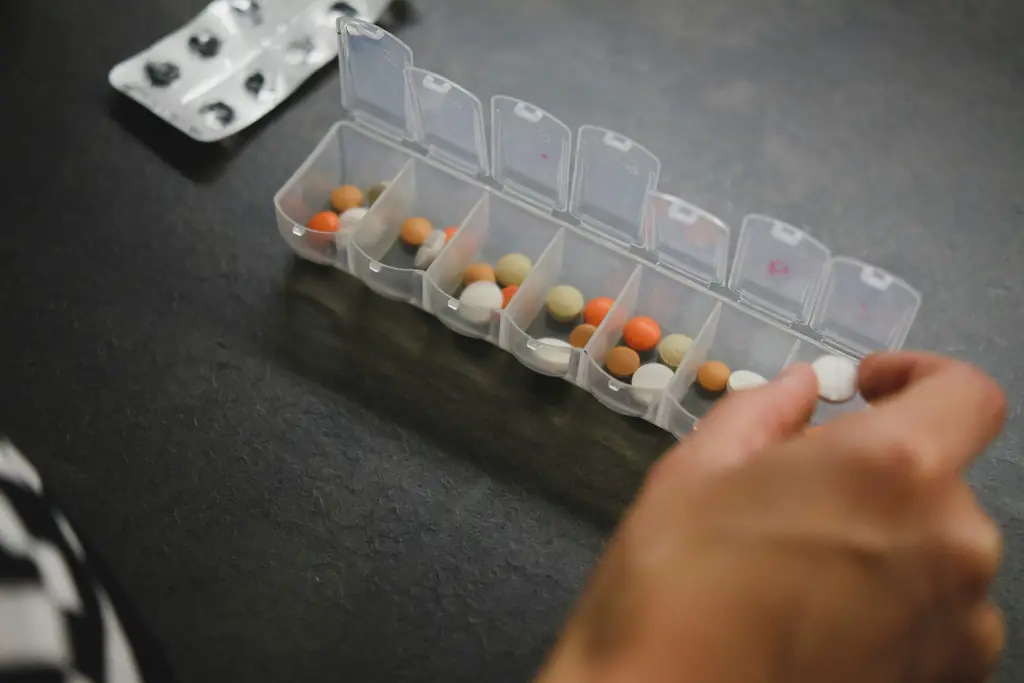
- Prescription medicines. Name, dose, how many times a day and what they were prescribed for. If you use a pill organizer, photograph the original bottles.
- Over-the-counter medicines. Pain relievers, antacids, antihistamines, cold remedies, sleep aids.
- Vitamins and supplements. Product name, brand and dose. Include the ones you take "now and then".
- Herbs, medicinal teas and botanical products. Include the ones a relative or neighbor gave you and the ones you buy at natural-product stores.
- Creams, patches, drops and inhalers. They count too.
- Allergies and past reactions. To medicines, foods or products that have already disagreed with you.
How the physician uses your list in the assessment
The medical care at the retreat is provided by Dr. Diana Nieves Castro, MD, a general practitioner licensed in Puerto Rico. Her assessment starts from your history, and your list of medicines and supplements is a central part of that history.
With the list, the conversation can be concrete: what you take, what for, whether anything overlaps with something else, and what is worth keeping in mind during the week, for example around meals, heat, physical activity or travel. The retreat assessment is wellness: assessment, education and habits. It is not treatment, and it does not replace your primary care doctor or specialists.
If lab work is needed, the physician decides when it is clinically appropriate. For how that part works, read the physician visit and lab work at the retreat.
Do not change your medicine on your own
This is the most important rule in the guide. Do not stop, reduce, delay or replace any prescribed medicine, vaccine or screening on your own, either before the trip or during the retreat. That holds even if you feel well, even if you read that a "natural" product is an option, and even if you think the retreat will make a medicine unnecessary.
Some medicines can become dangerous if they are interrupted suddenly: blood pressure, heart and diabetes medicines, blood thinners, antidepressants and thyroid medicines, among others. Any change is decided by you together with the doctor who prescribes it, not by a retreat, a coach or a store.
What we ask is the opposite: bring your list as it is today, with what you actually take. That is what lets the team plan with you safely.
Supplements and herbs: what to know before you pack them
Many people drawn to a holistic approach already use supplements or herbs. That is your decision, and we want to know about it. These are the general ideas that matter for travel and for your safety:
- "Natural" does not mean safe. Supplements and herbs can have side effects, and they can interact with prescription and over-the-counter medicines.
- Dietary supplements are not approved to treat, cure or prevent disease. That is an important difference from medicines, which go through an evaluation of effectiveness and safety before they are sold.
- Quality varies. What is in a product may not match its label, and combination products make it hard to know what you are really taking.
- Some combinations deserve special attention. Blood thinners, blood pressure and diabetes medicines, antidepressants and anything related to surgery or anesthesia are the groups where it matters most that the medical team knows what you take. Also say so if you use weight-loss, energy, sleep or mood products, or any product whose ingredients you do not know.
- Pregnancy, breastfeeding and children call for more caution. If you are pregnant or breastfeeding, talk to us before you reserve.
- Bring the label or a photo. The physician can only comment on what she can see, and an assessment at a wellness retreat is not a guarantee that a combination is safe. For questions about interactions, also ask your own prescriber or pharmacist.
- The evidence is uneven. For many supplements, the evidence for benefit is limited or mixed. If you want to know what is known about a specific product, put it on your list and ask the physician.
What the retreat does with your list
The physician reviews everything you take and talks it through with you. The retreat also offers an assessment with a licensed physician, mobility coaching, meditation and breathwork, nutrition sessions, meals, lodging and island activities.
If anyone promises that a product or a protocol will fix something, ask what it is based on and what your own doctor says.
What to bring in your bag and what to tell the team
After you reserve your place, we tell you how to send us your list and your documents. In the meantime, prepare like this:
- Your complete list, written and dated.
- Your medicines in their original containers, enough for the whole stay plus a little extra in case the trip home is delayed.
- A copy of your prescriptions or the name of your pharmacy.
- Your allergy and past reaction information.
- If you use devices (glucose meter, inhaler, blood pressure monitor), bring them with spares.
- A note about any medicine that needs a fixed schedule, refrigeration or special care in the heat.
If a medicine changes, a new symptom appears or you start a product between reserving and traveling, tell us and update the list. Heat and exertion can matter more with blood pressure medicines, diuretics and diabetes medicines, so ask your own prescriber how to use them in a warm climate.
Before you travel, tell the team about conditions or medicines that changed recently, important allergies and dietary needs. To plan the whole bag, see the retreat packing list.
Activities depend on the cohort itinerary
Activities on the island are possibilities, not promises: Examples of what the area offers and what the days may include: snorkeling, a walk in El Yunque rainforest, time at Luquillo beach, a gentle stretching session, and relaxed evenings outdoors. The activities for your cohort are confirmed with accepted guests.. Which ones happen depends on each cohort's itinerary, the weather and how the group is doing. No activity is mandatory.
That is why your list matters here too: if you take a medicine that makes you more sensitive to the sun, that needs you to eat at certain times or that makes you dizzy, tell us so the week can be planned with you. If you have a condition that changed recently, read what to do if you have a chronic condition.
Honest questions people tend to have
"I prefer a natural approach. Will I be judged?" No. We want to know what you use and why. The physician is a licensed doctor, and the approach is integrative within medical care: assessment first, then sleep, food, movement and stress, and a review of everything you take.
"Is this a spiritual or alternative retreat?" No. It is a wellness retreat with a physician assessment, held in English, with meditation, breathwork and movement as part of the week. For the overall approach, read what a holistic wellness retreat is.
When to see a doctor before you travel
This guide is general information. It is not a diagnosis and does not replace a doctor. See your doctor before the trip, and do not wait until you arrive at the retreat, if:
- You have new symptoms, symptoms that are getting worse or symptoms you cannot explain.
- You started or changed a medicine in the last few weeks.
- You have surgery or a procedure with anesthesia coming up.
- You have an allergy or a past reaction to a medicine, supplement or herb.
- You are pregnant or breastfeeding.
- You are unsure whether a product you take is safe alongside your medicines.
Keep reading
The retreat runs 5 days starting November 15, 2026, with 10 places, held at a hacienda in Río Grande, Puerto Rico, in English. Applications close November 5, 2026. To see how to reserve your place, read how to apply for a place at the retreat.
For what the week looks like, see what to expect at the retreat. For everything about the first cohort, go back to the wellness retreat in Puerto Rico.
How we care for you
We evaluate, diagnose and treat; if needed, we give you a lab order for a lab near you.
We see adults and children of all ages. Patients under 21: a parent with patria potestad (parental authority) or a legal guardian is on camera for the whole visit and shows photo ID.
Real-time video visit. We send you a secure video link. It works on your phone, tablet or computer.
If appropriate, the doctor prescribes and we send your prescription to your pharmacy.
You must be physically in Puerto Rico during the visit (visitors, tourists and cruise passengers are welcome).
In an emergency, call 911.
Frequently asked questions
Should I bring my medications to the retreat?
Do I need to list supplements and herbs too?
Can I stop taking my medicine while I am at the retreat?
What is my list of medicines and supplements for?
Can supplements treat or prevent a disease?
What if I am pregnant or breastfeeding?
Are all the activities guaranteed?
Is the retreat medical treatment?
About this page
Author: The Health Initiative
Medical care provided by Dr. Diana Nieves Castro, MD (PR license 24027)
Disclosure: Founding Executive Director of The Health Initiative
Published: 2026-10-15 · Updated: 2026-10-15
Sources (1)
- Using Dietary Supplements Wisely (NCCIH, NIH) (opens in a new tab) (accessed 2026-10-15)